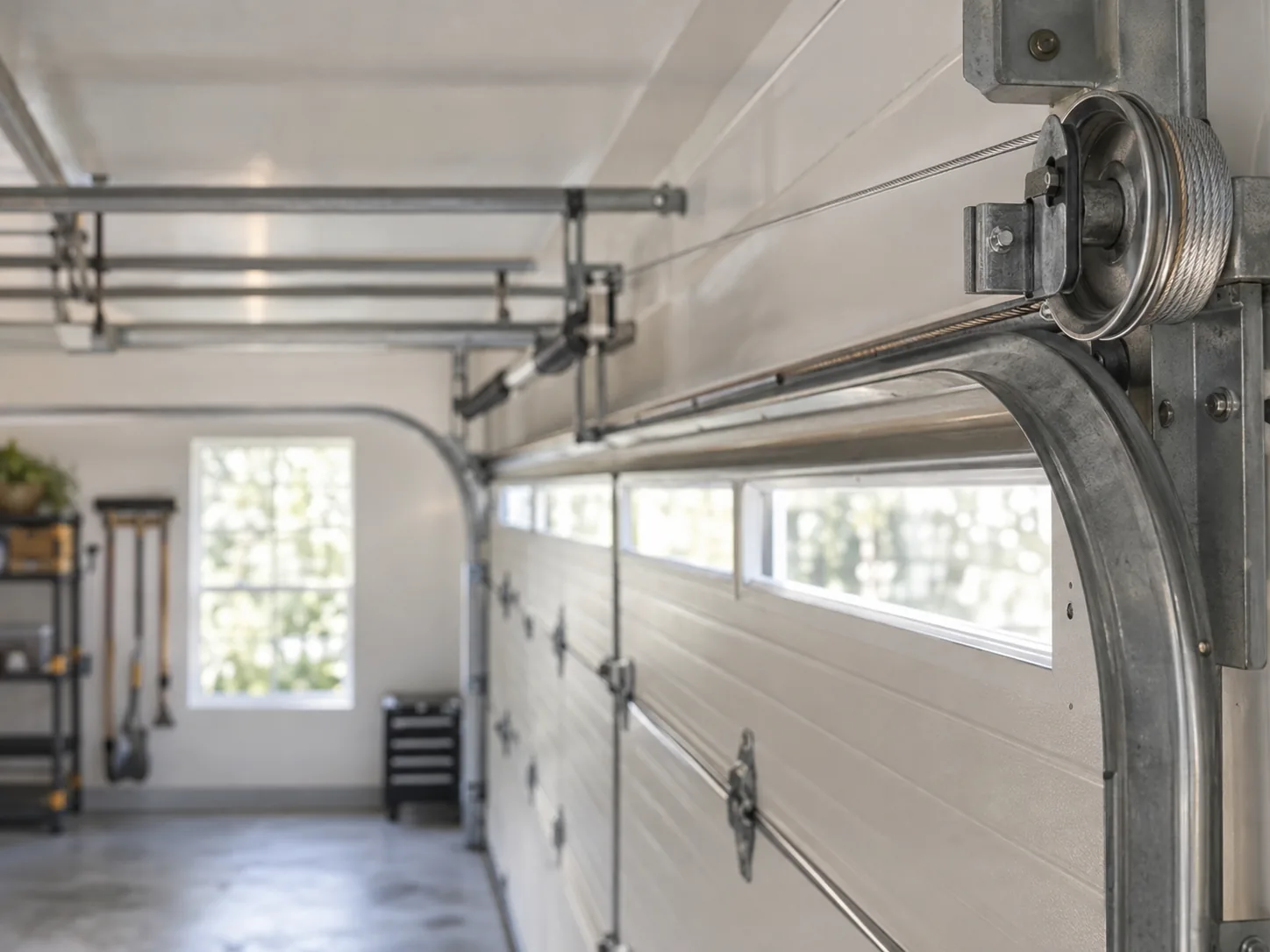
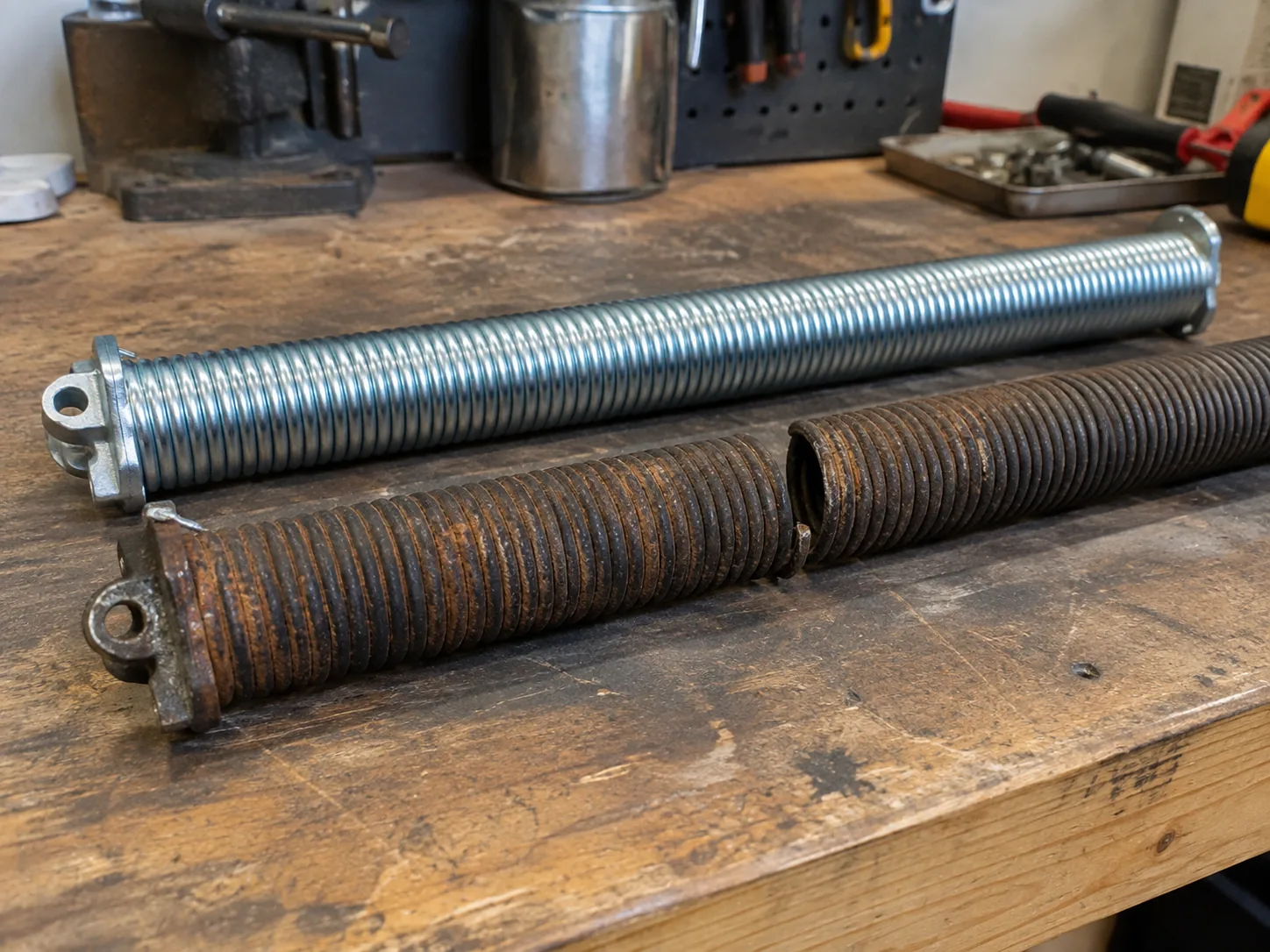
Cable wear is a friction and corrosion problem before it's anything else, and both of those get worse in a cold-climate winter. Galvanized coating on older cable thins out over years of the drum spinning against it, and once the coating is gone, bare steel rusts. Rust doesn't fail evenly - it pits the strands, and a pitted strand snaps under load instead of stretching.
Because so much of the area's housing stock is from the 1960s and 70s, a lot of these garages have gone 40, 50, even 60 years without ever having the cable swapped as a standalone job - it usually only gets replaced when it already broke, or as an afterthought during a spring job. That means a wide slice of doors in this area are running cable well past what any manufacturer would call a service life.
Cold makes it worse in a specific way: steel cable loses some flexibility as temperature drops, and a garage that isn't heated swings through that cold every night in winter. A cable that's already thinning from rust and running over a slightly rough drum edge is more likely to snap on a 10-degree morning than a 60-degree one, simply because the metal is less forgiving right at the moment of extra load - like the first cold pull of the day.