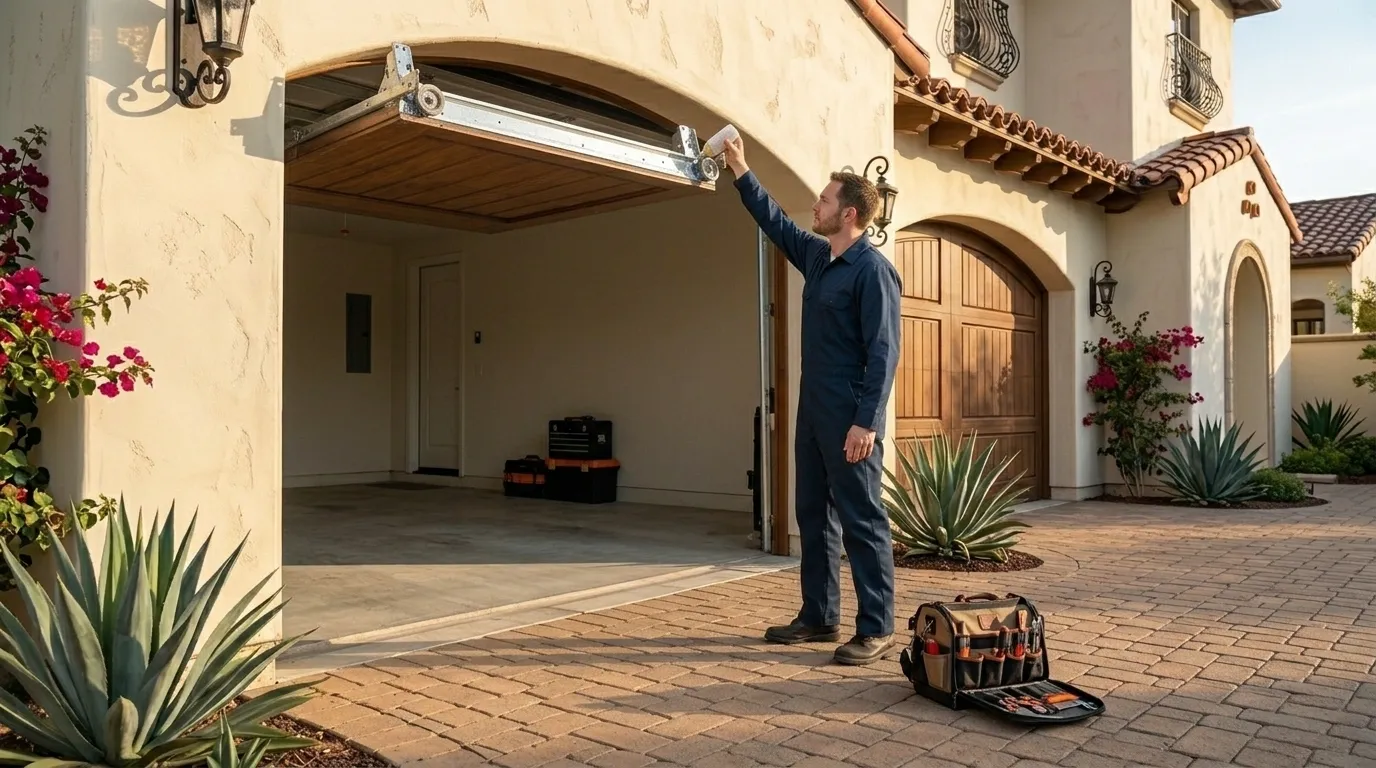
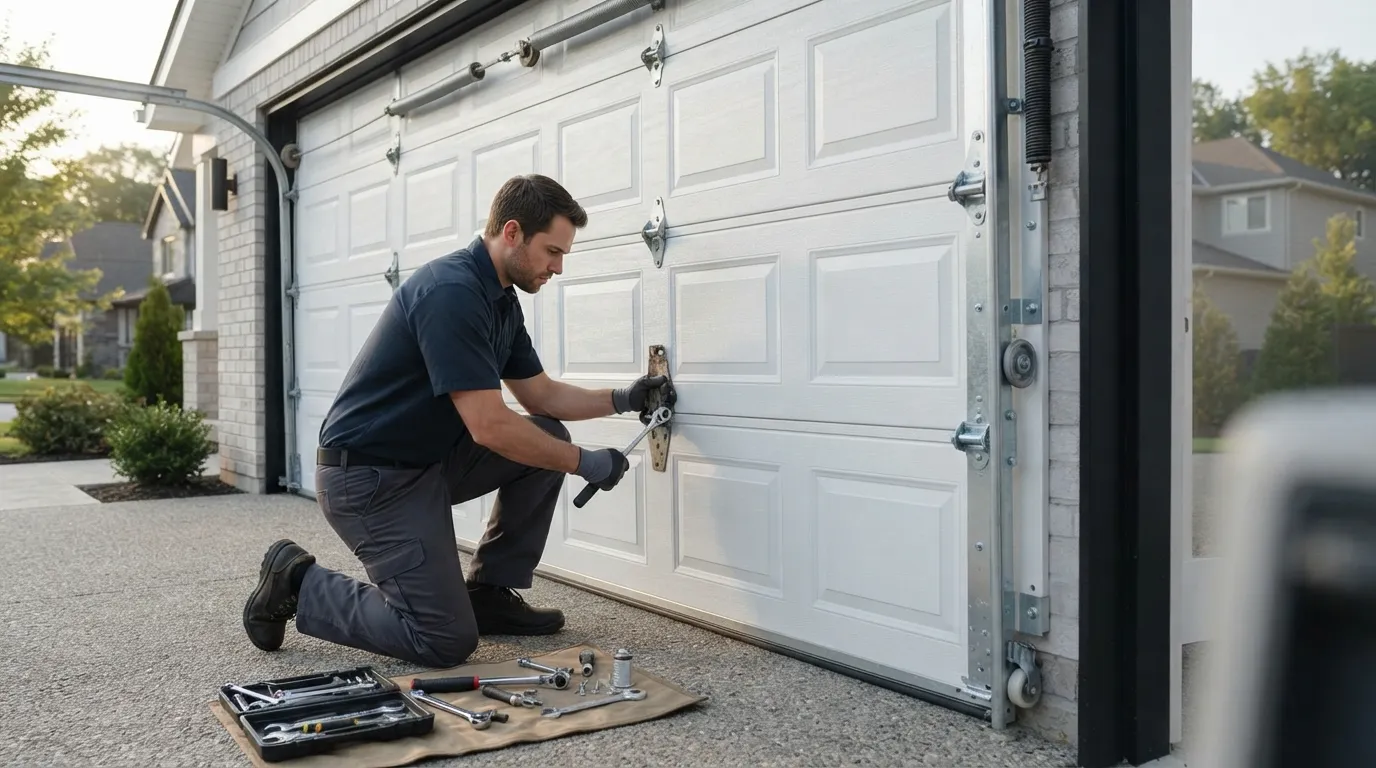
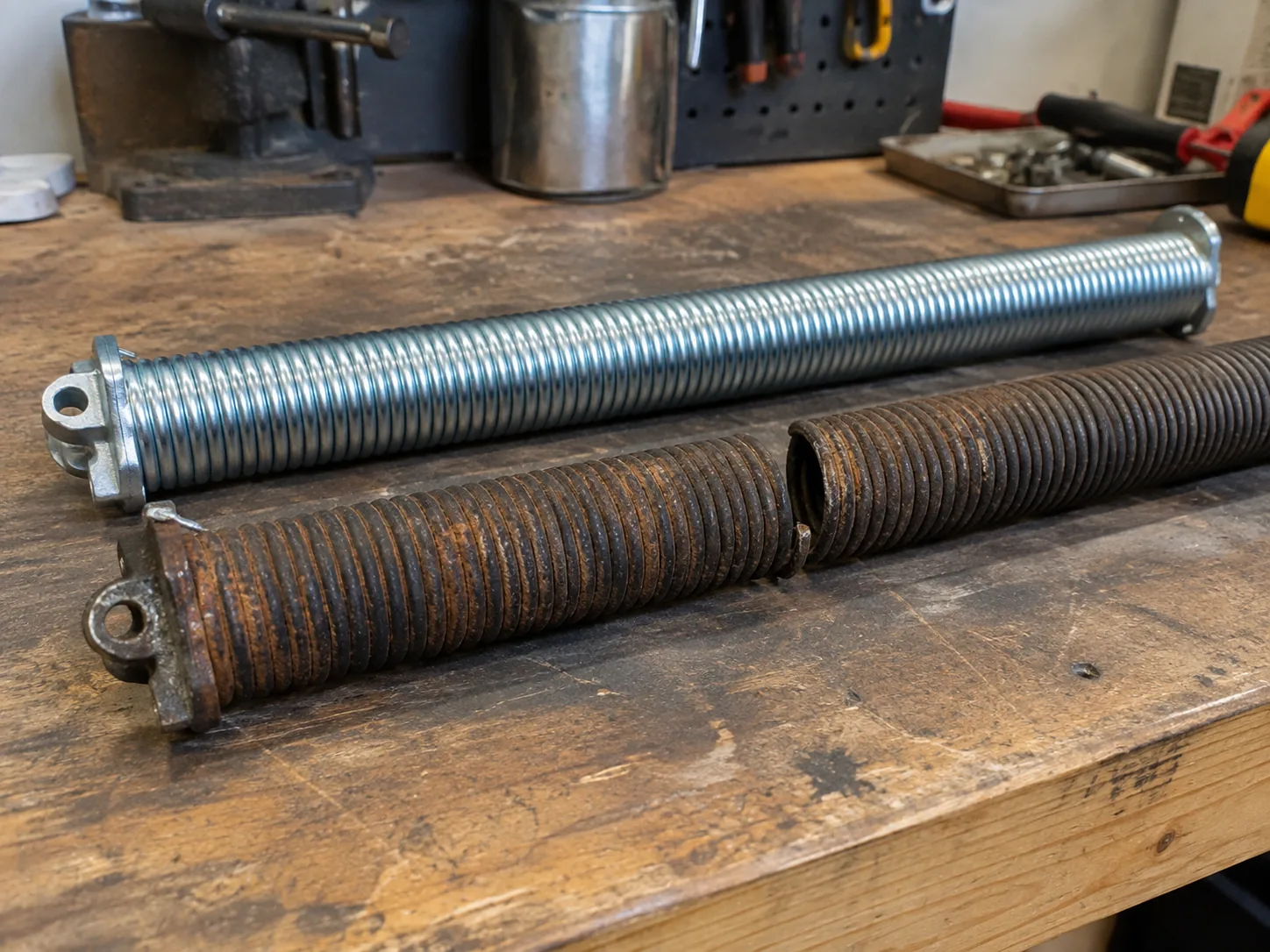
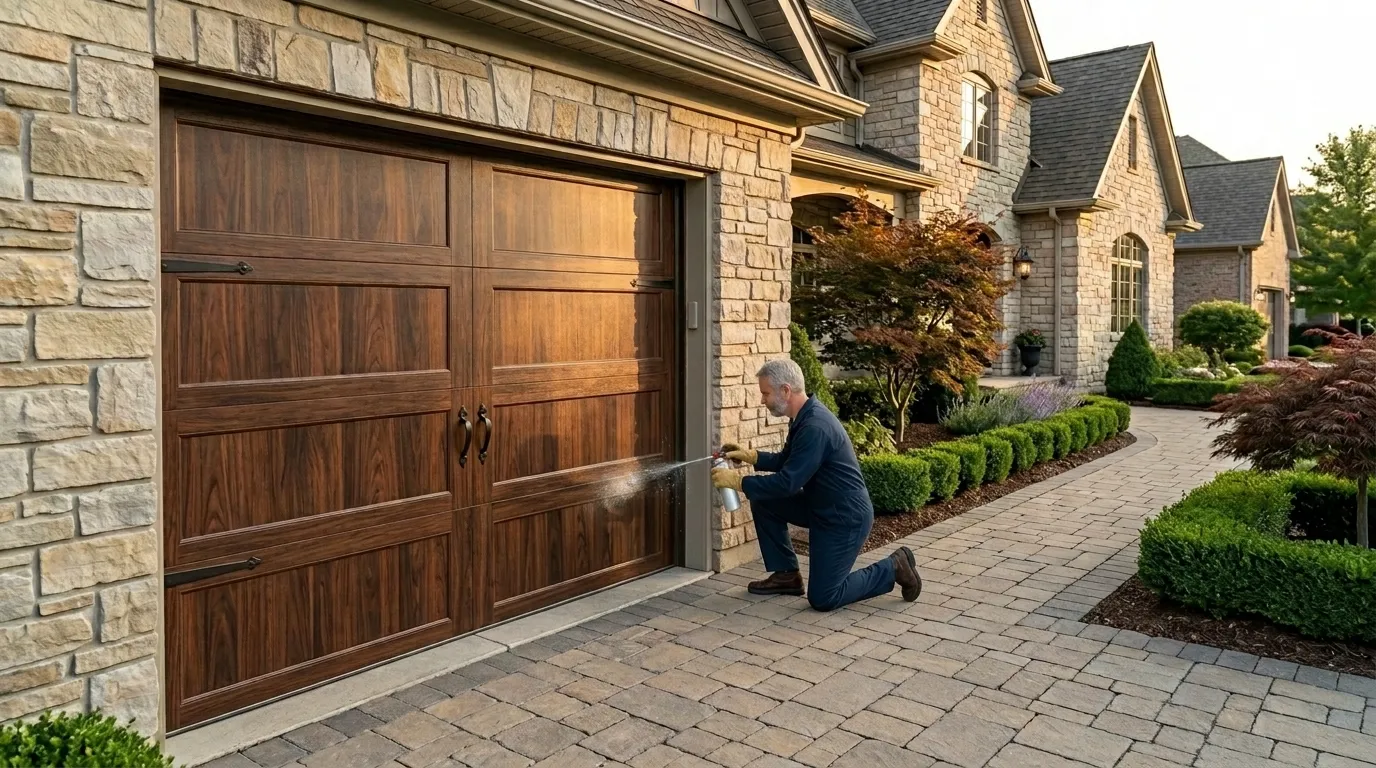
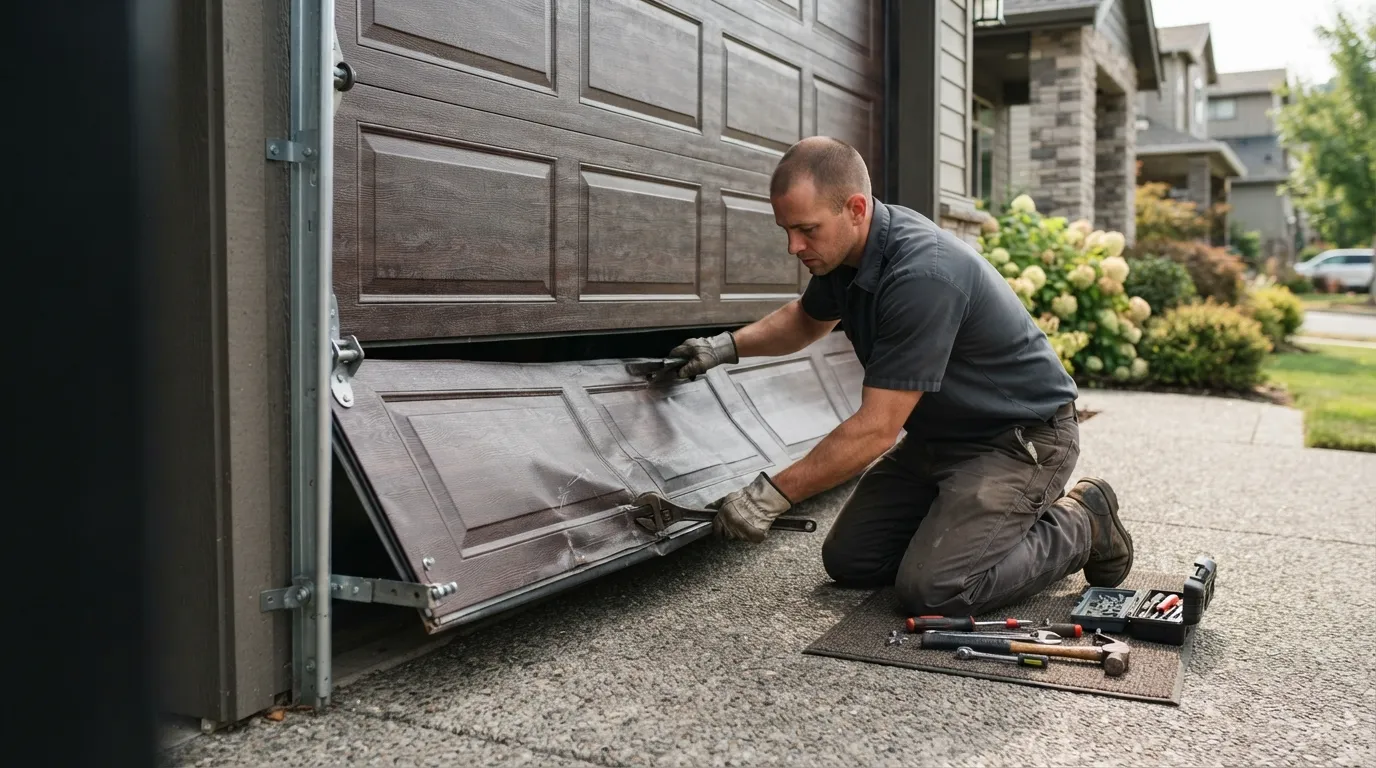
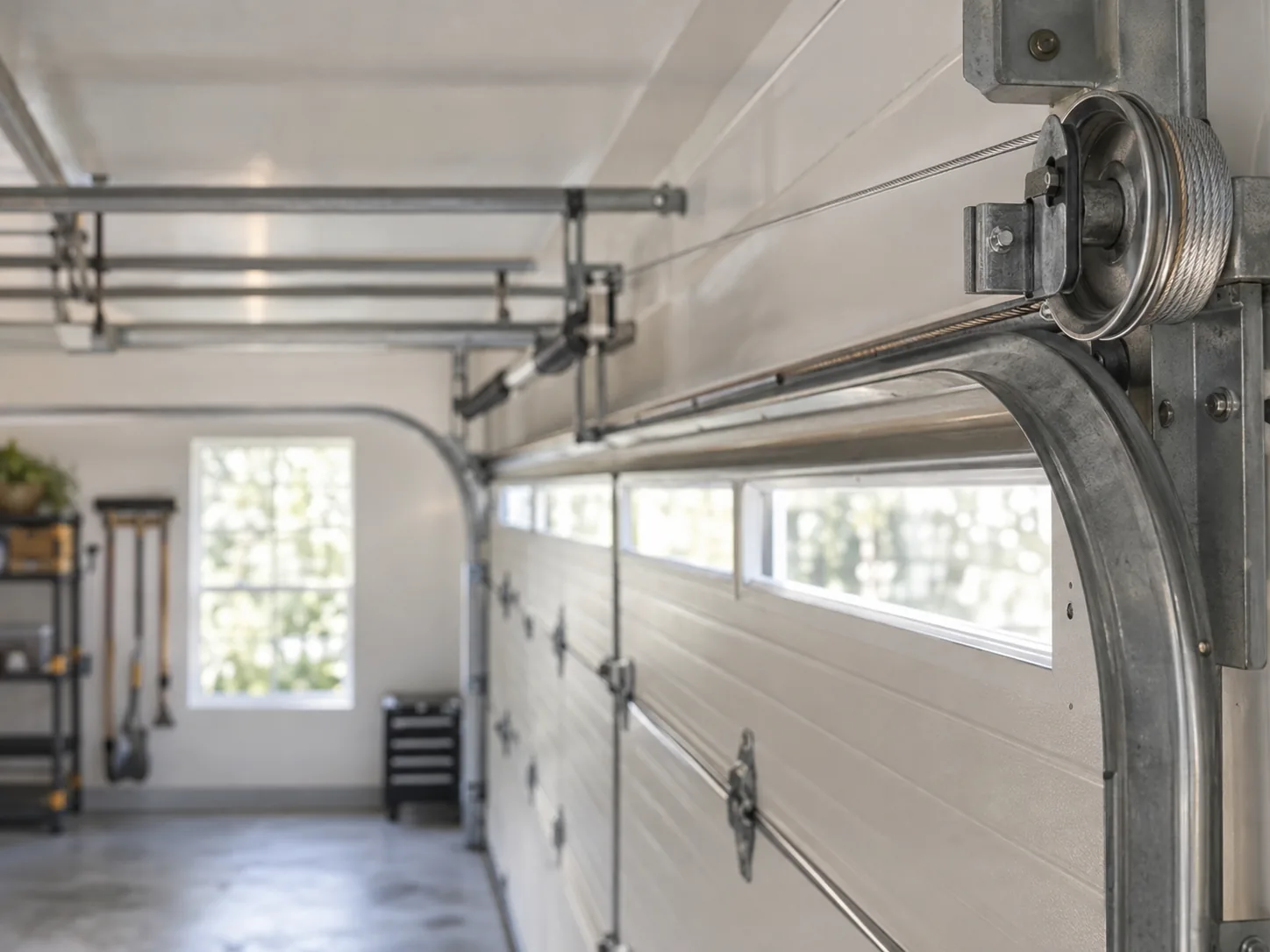
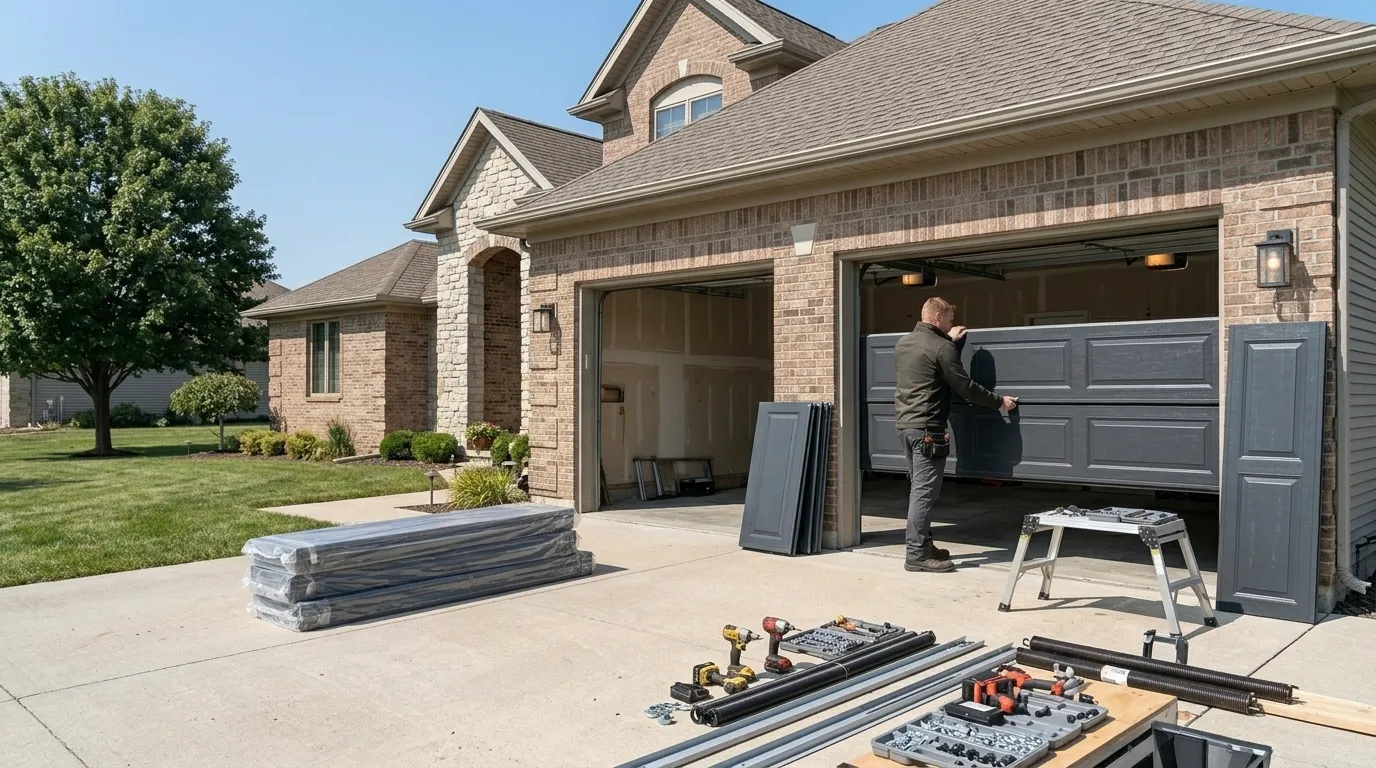
Old Bridge sits in a cold-severe climate band, and that's the single biggest reason commercial doors here fail differently than doors in milder climates. Repeated freeze-thaw cycles through the winter stiffen rubber seals, shrink lubricant film on torsion springs, and cause steel tracks to contract just enough to throw a roller out of alignment. A door that ran quiet in October can start grinding by January for no reason other than the cold.
The other factor is age of the building stock. Housing across Old Bridge was mostly built between 1938 and 2005, with a median build year around 1965, and many of the town's commercial strips, service garages, and light-industrial buildings went up in that same stretch of decades. That means a lot of the commercial overhead doors in service today are running on hardware and track systems installed decades ago, sometimes retrofitted once with a newer opener bolted onto old track. Mismatched generations of hardware wear unevenly, and it shows up first at the weak point - usually a roller or a bearing that was never upgraded when the rest of the door was.
High daily cycle counts on commercial doors just accelerate whatever the climate and the age of the hardware are already doing.