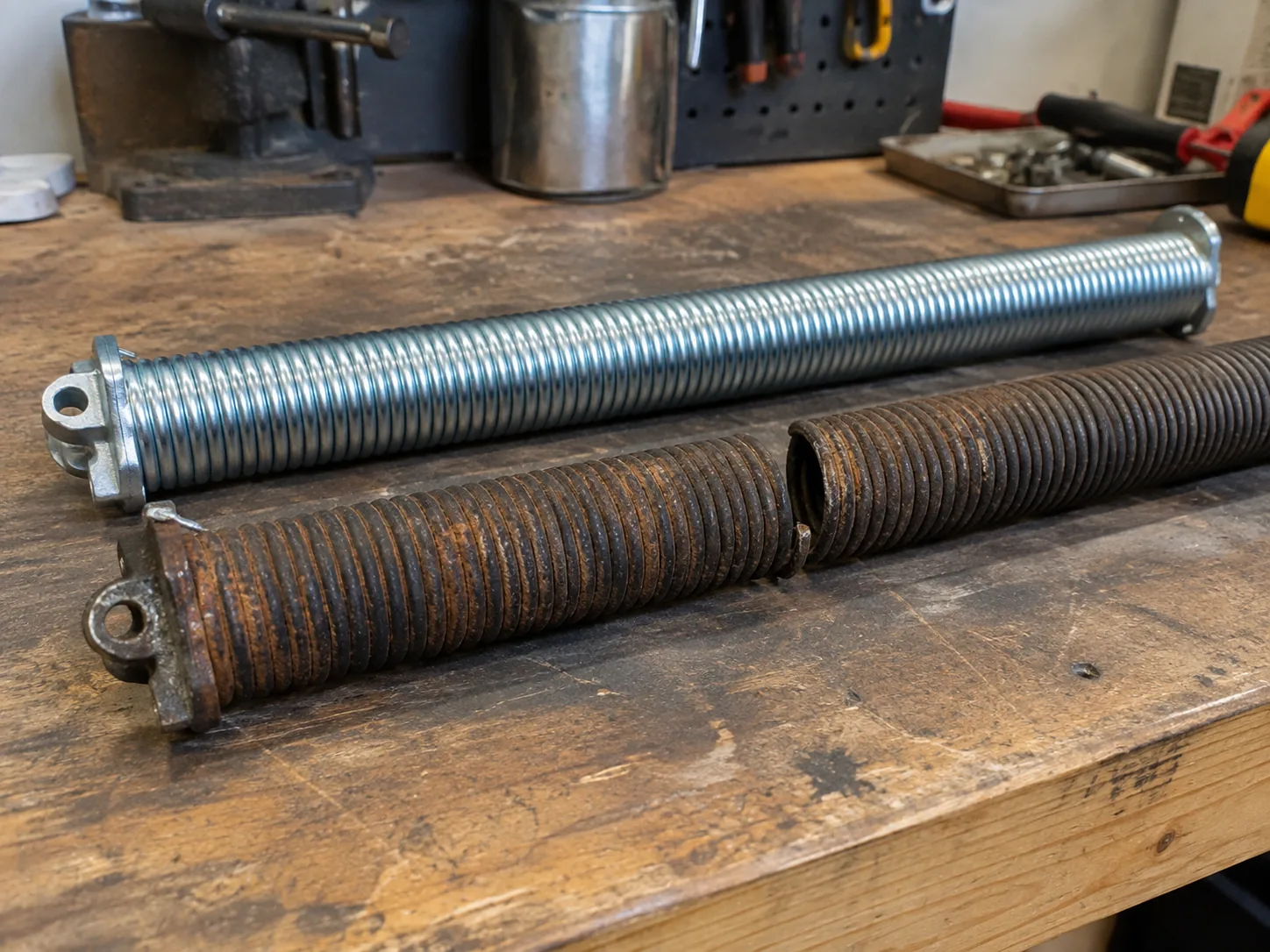
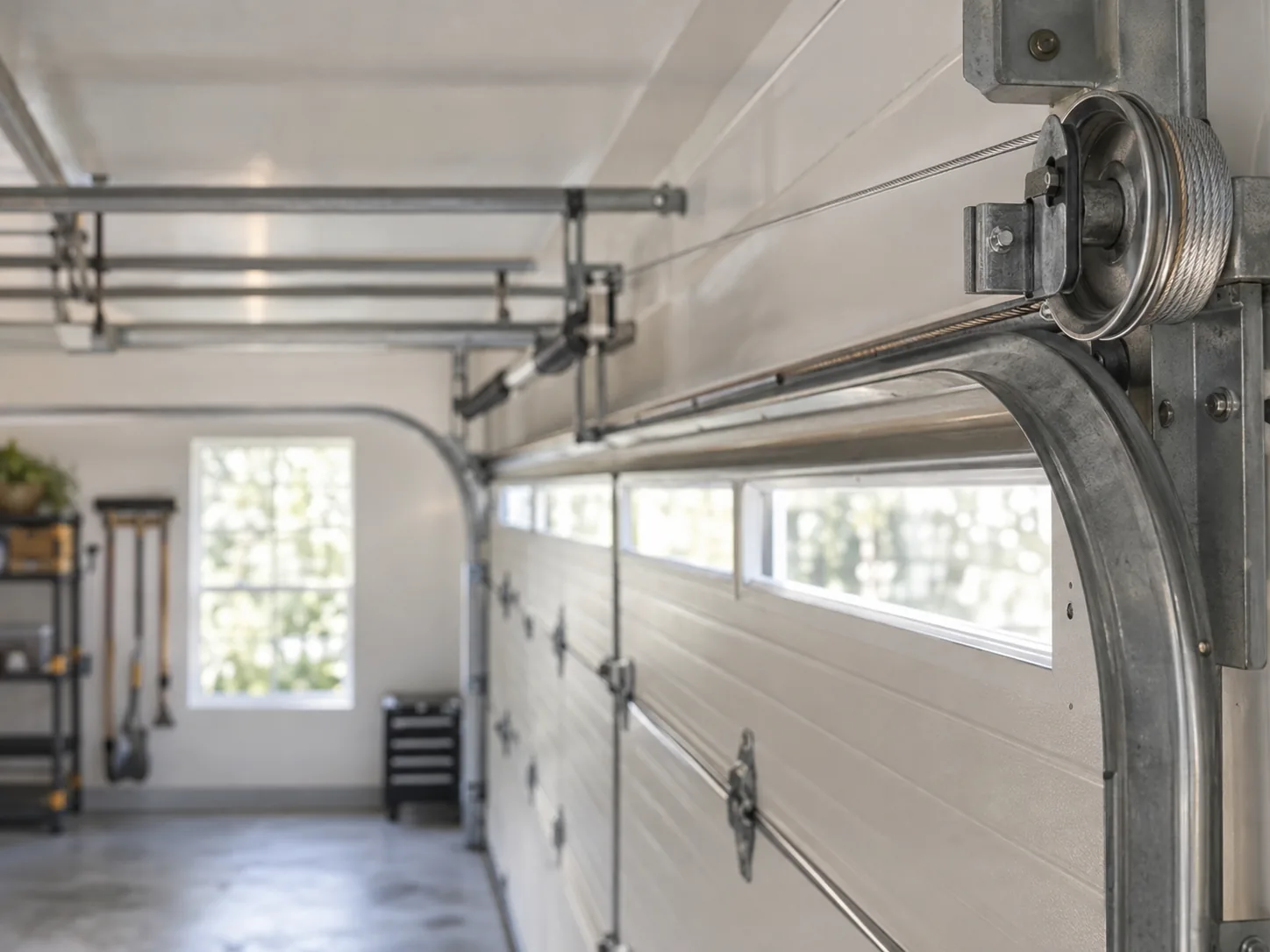
A torsion or extension spring is rated for a number of open-close cycles, and that number doesn't move - but the conditions it works under do. Housing stock in this service area runs from 1938 to 2005, with the bulk of it dating to the 1960s and 70s. A lot of those original doors have been replaced over the decades, but the spring hardware and torsion tubes on many houses are older than the door panel itself, holding tension calculated for a lighter, older-style door.
Climate matters just as much as age. This area sits in a cold, severe winter band, and that swing between summer heat and hard winter cold is exactly what fatigues spring steel - the metal expands and contracts through hundreds of cycles a year even when the door isn't moving, and that's on top of the mechanical cycles from actual use. Cold also makes the metal less forgiving right when it fails, which is why a lot of our winter calls are sudden, full breaks rather than slow stretching.
A house built in the 1960s with its original torsion setup, sitting through fifty-plus New Jersey winters, is a spring failure waiting on a trigger - usually just one more cold morning.