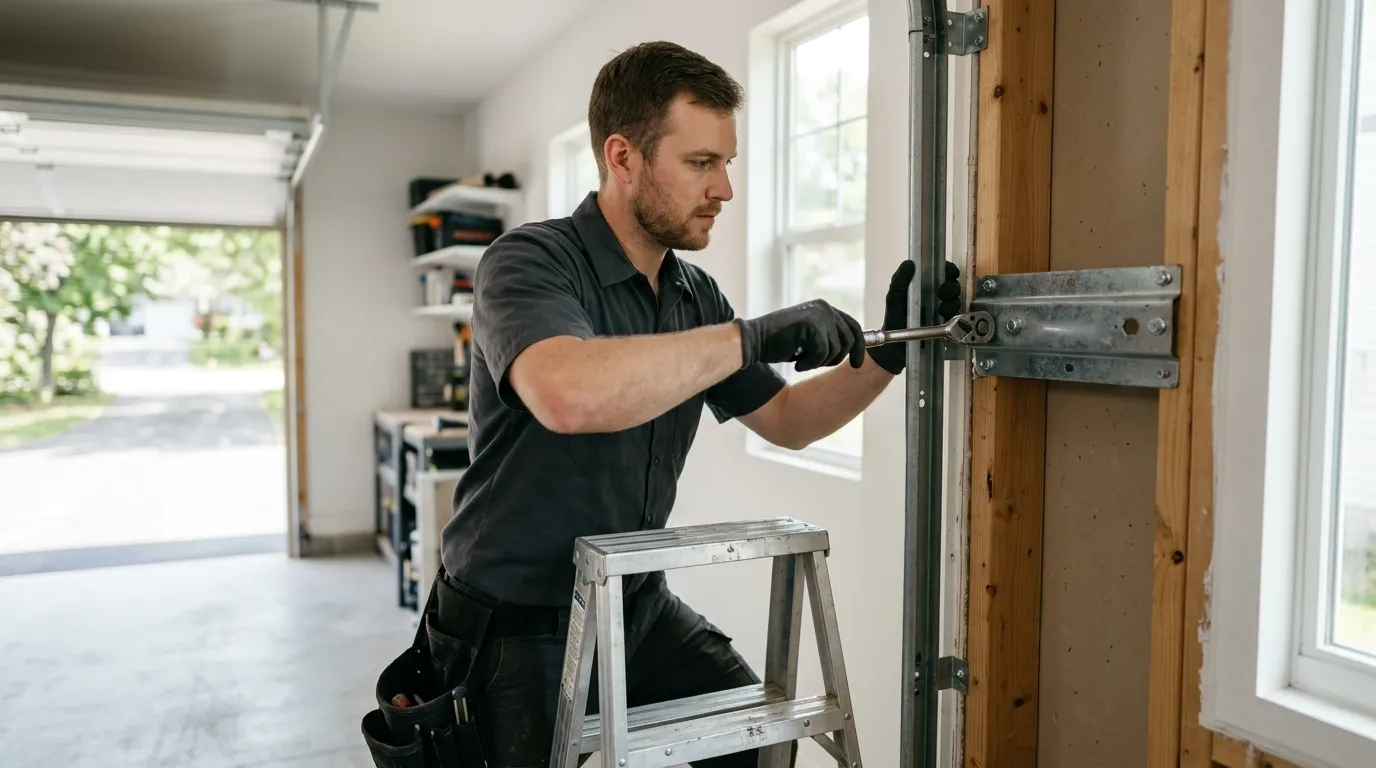
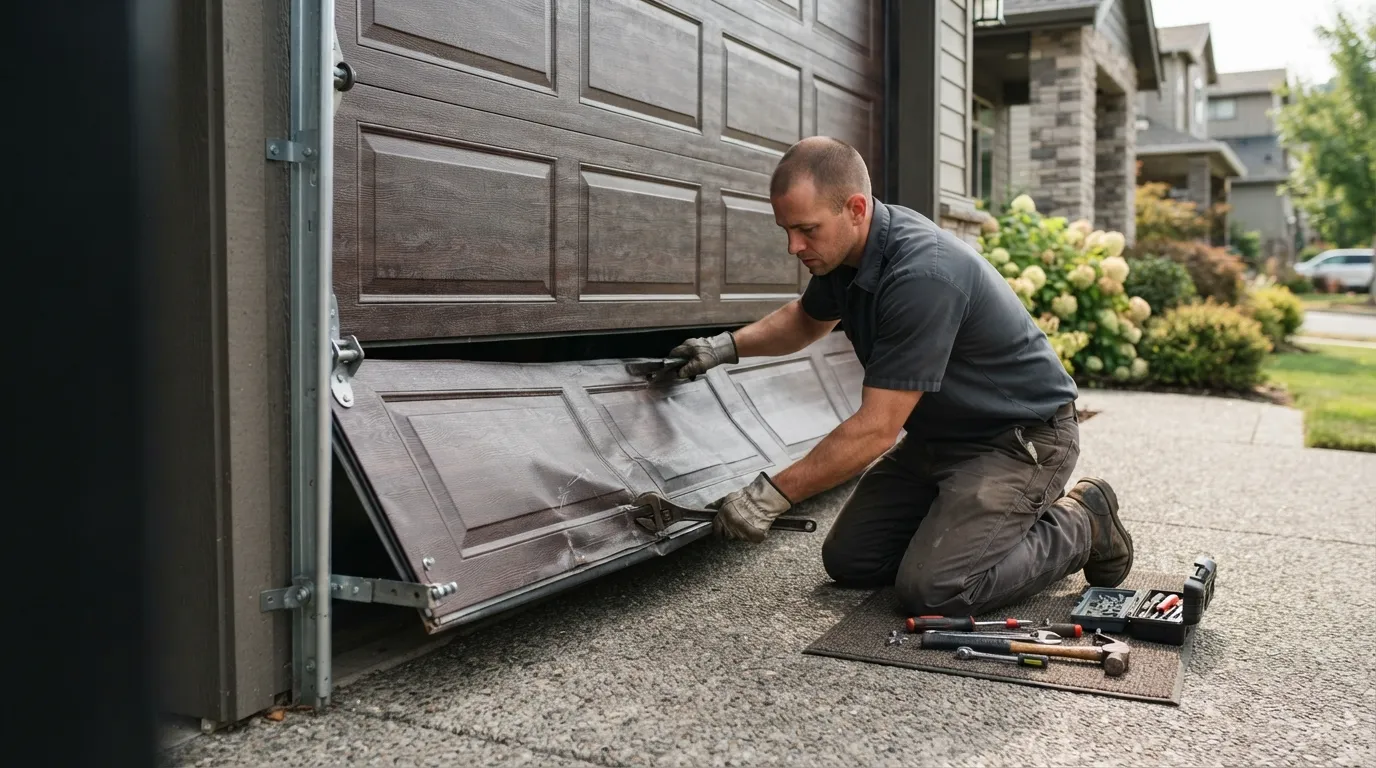
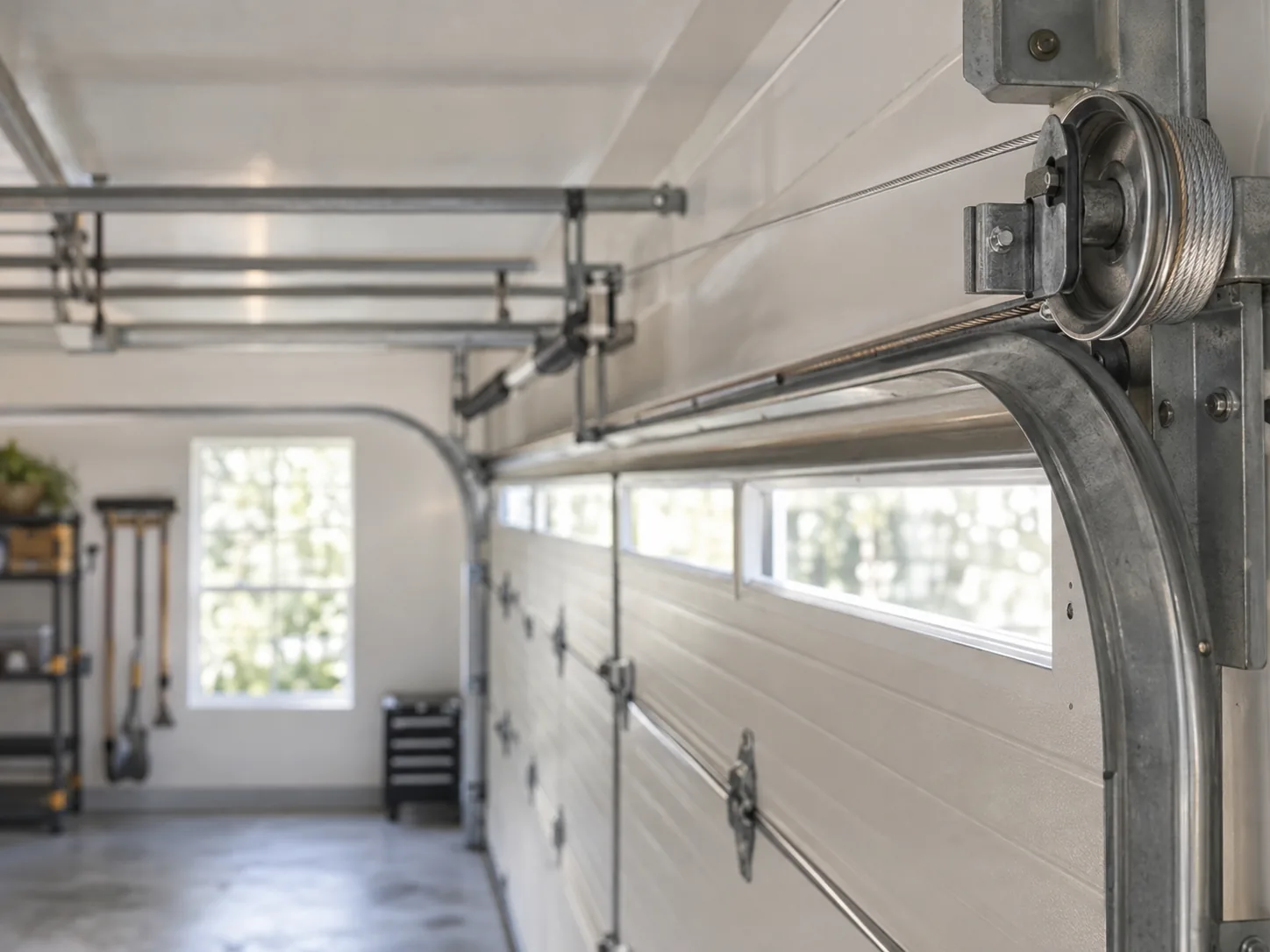
Housing in this area was mostly built between 1938 and 2005, with the bulk of it dating to the 1960s and '70s. That matters for maintenance because a lot of these garage doors and their hardware are original or close to it - torsion springs, tracks, and openers that were sized and installed decades ago, before insulated doors and sealed bearings were standard. Original hardware wasn't built to run forever without attention, and a lot of owners never had a reason to look at it until something failed.
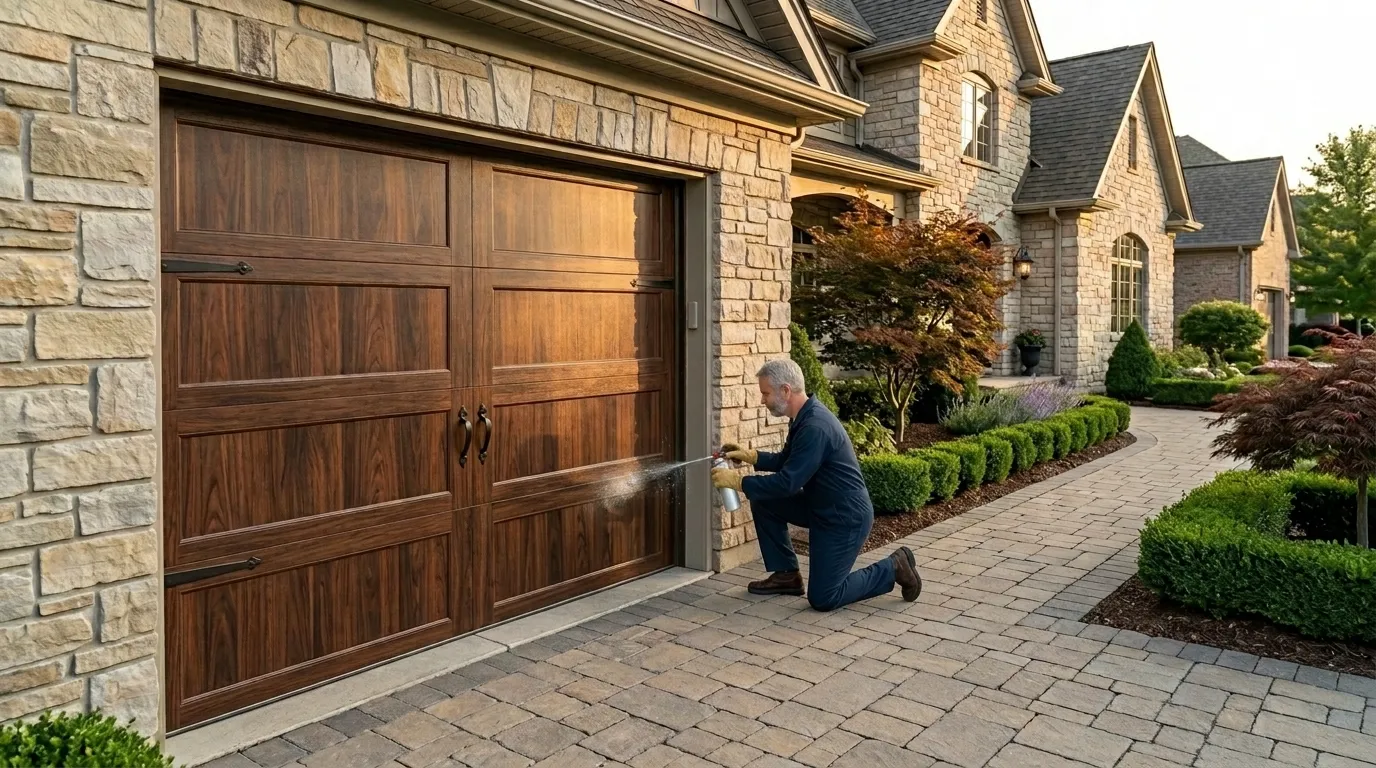
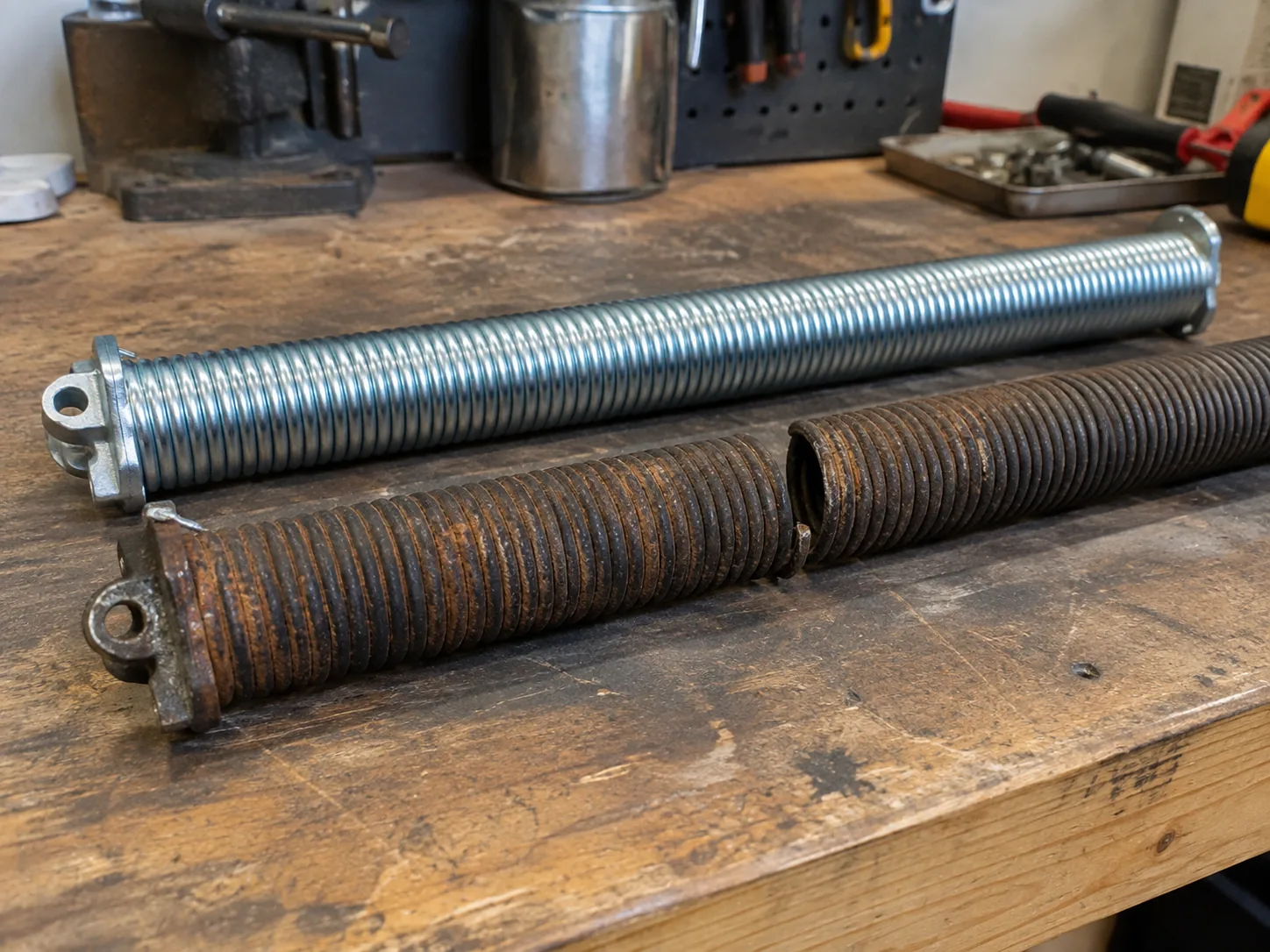
The other factor is climate. This area sits in a cold, severe winter band, which means real freeze-thaw cycles every year. Cold makes steel springs stiffer and more prone to snapping under load, especially springs that are already past their rated cycle count. It also shrinks and swells wood-frame tracks and door panels, which is why doors that ran smooth in September start binding by January. Lubricant that's thinned out over a hot summer gums up in the cold, adding friction right when the opener has the least tolerance for it.
Put those two things together - older original hardware plus a real winter - and you get the pattern we see most: doors that were fine for years and then go stiff, noisy, or unbalanced right as the temperature drops.