
Halfway stuck door lurching
Most calls we get from this town start the same way: someone hits the wall button, the door lurches up an inch or two unevenly, and stops. Sometimes it's already down and won't budge at all.
South River, Old Bridge
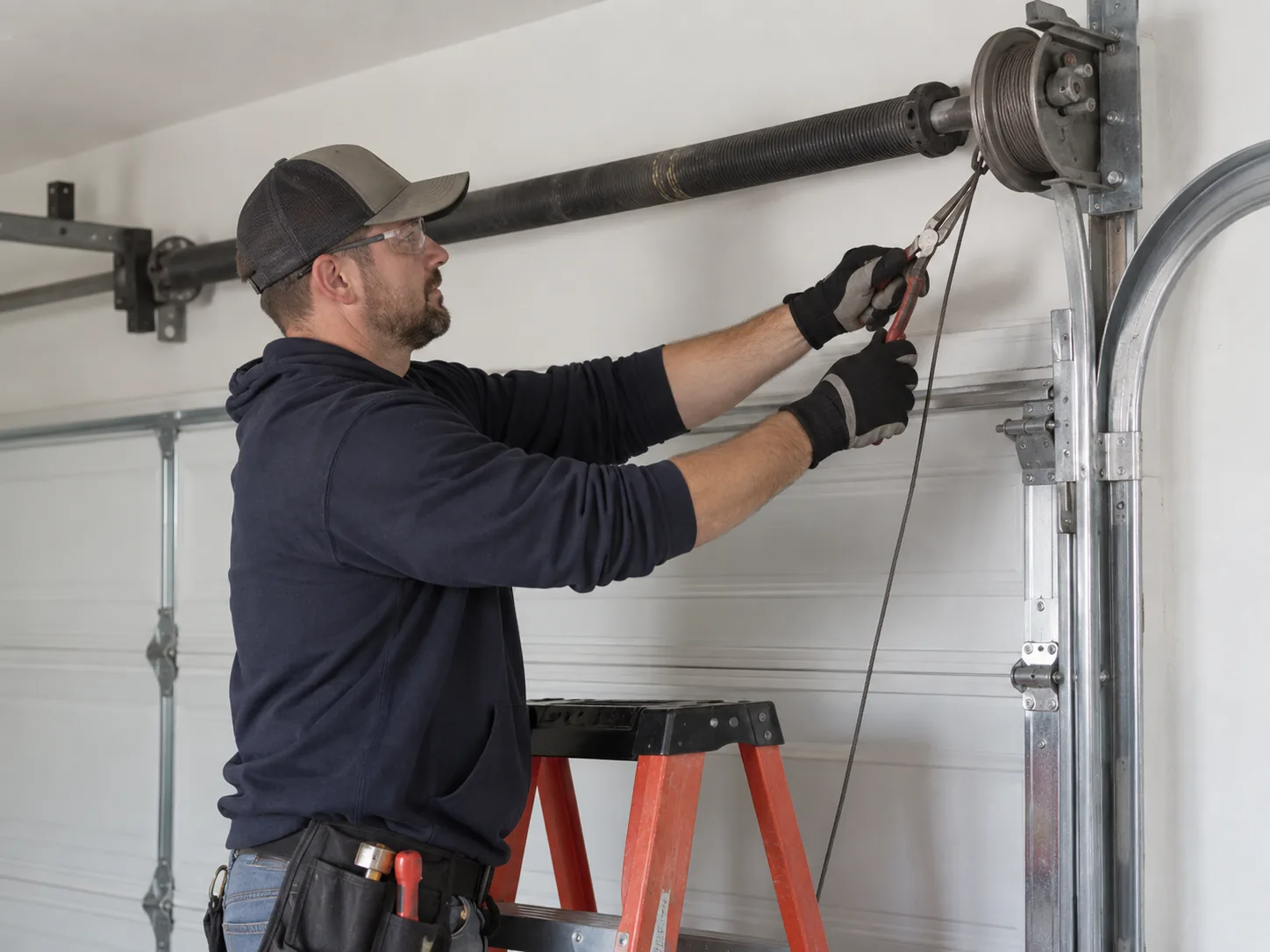
Snapped or frayed garage door cables on South River's 1950s-60s housing stock. Truck comes from Old Bridge, 4 miles out. Same-day cable repair calls.
Warning signs
South River sits about four miles from our Old Bridge truck, close enough that a cable call here doesn't turn into a half-day trip. That matters because a snapped cable isn't a wait-and-see problem - the door is either stuck shut or it's hanging crooked on one side, and every minute it sits like that puts more strain on the opener and the remaining cable.
Most calls we get from this town start the same way: someone hits the wall button, the door lurches up an inch or two unevenly, and stops. Sometimes it's already down and won't budge at all.
On a shorter drive like this one, we can usually get a truck moving the same day a call comes in, which counts for something when your car is trapped behind a dead door.
The cable itself is a thin steel wire, and by the time it frays enough to snap, it's usually been fraying for months without anyone noticing the warning signs - a slight popping sound, a door that drifts to one side, a cable strand poking out near the bottom bracket.
Local causes
South River's housing mostly went up in the late 1950s and 1960s, right in the middle of the 1938-2005 range we see across this whole service area, with the area median landing around 1965. A house built in 1958 has had a lot of winters, and this is a cold-climate region - the kind of cold that stiffens up steel cable and the springs it works with, making both more brittle by the time February rolls around. Original hardware from that era, where it hasn't been swapped out, tends to have thinner cable and older drums than what goes on doors today. Combine sixty-plus years of temperature swings with a cable that was never rated for today's heavier insulated doors, and you get exactly the kind of fraying-then-snapping failure we see on these calls. Rust at the bottom bracket is another common culprit in homes from this era - moisture gets into the cable groove on the drum and eats away at strands you can't see until the cable lets go. None of this means every door here is a ticking clock, but it does mean cable failure shows up earlier on 1950s-60s stock than it does on a newer build.
On the truck
For a cable job, the truck carries replacement cable in the standard lengths and gauges that fit the torsion and extension setups common on doors from this era, along with the drums, bottom brackets, and fasteners that usually need attention at the same time - a cable rarely fails in isolation from the bracket it's anchored to.
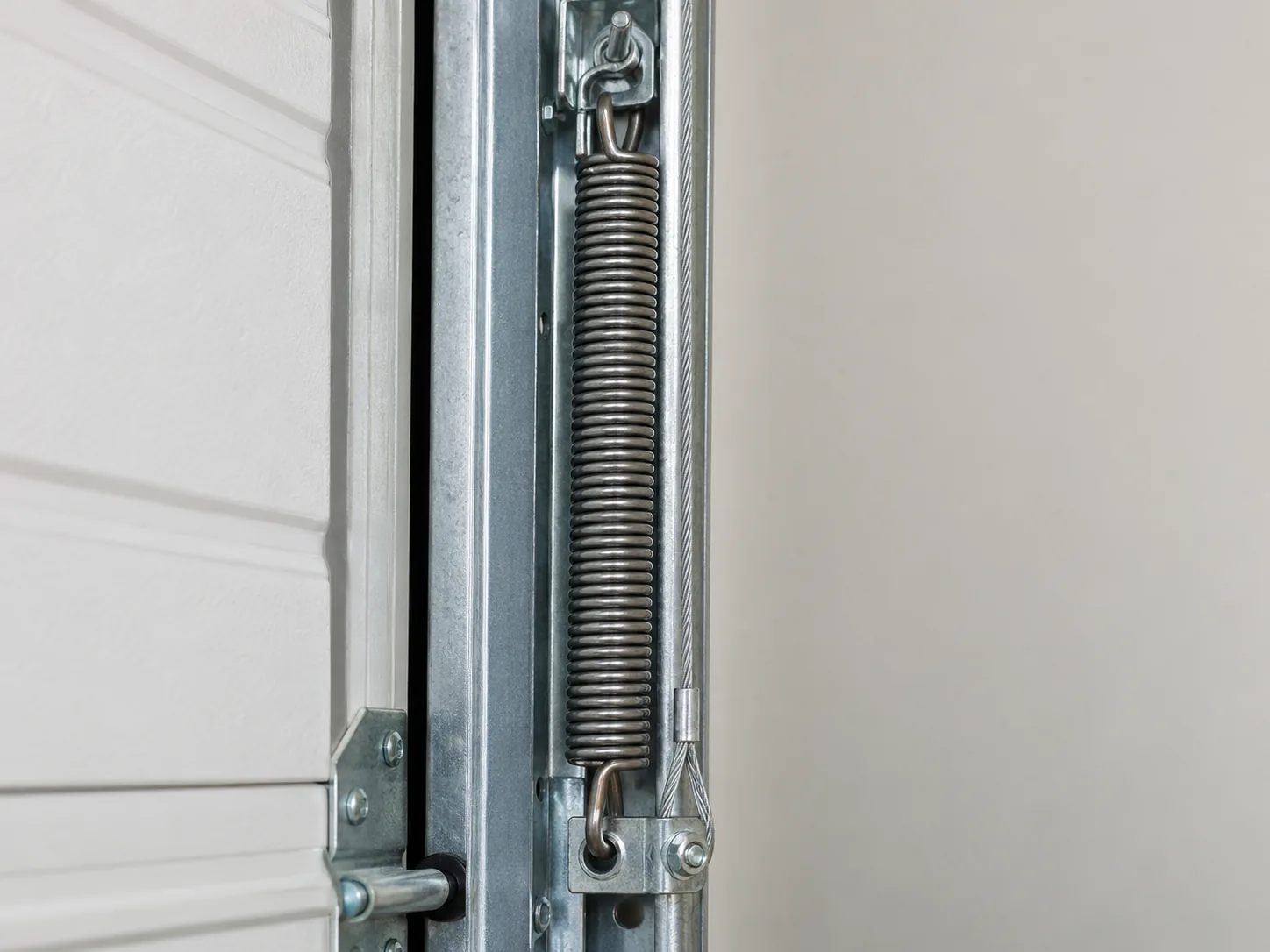
We also carry cable drums and safety cables for extension-spring systems, since older extension setups without a separate safety cable are still out there on houses that haven't been updated.
Given the cold-climate wear on springs mentioned above, the truck also stocks torsion springs sized for standard residential doors, because a spring that let go around the same time as the cable is common enough that we check both before calling a job done.
What isn't always on the truck: specialty cable for oversized commercial doors or custom architectural doors, which sometimes needs to be ordered in. That's the honest limit here - most residential jobs get handled same-visit, but an unusual door can mean a return trip once the right part is in hand.
DIY or pro
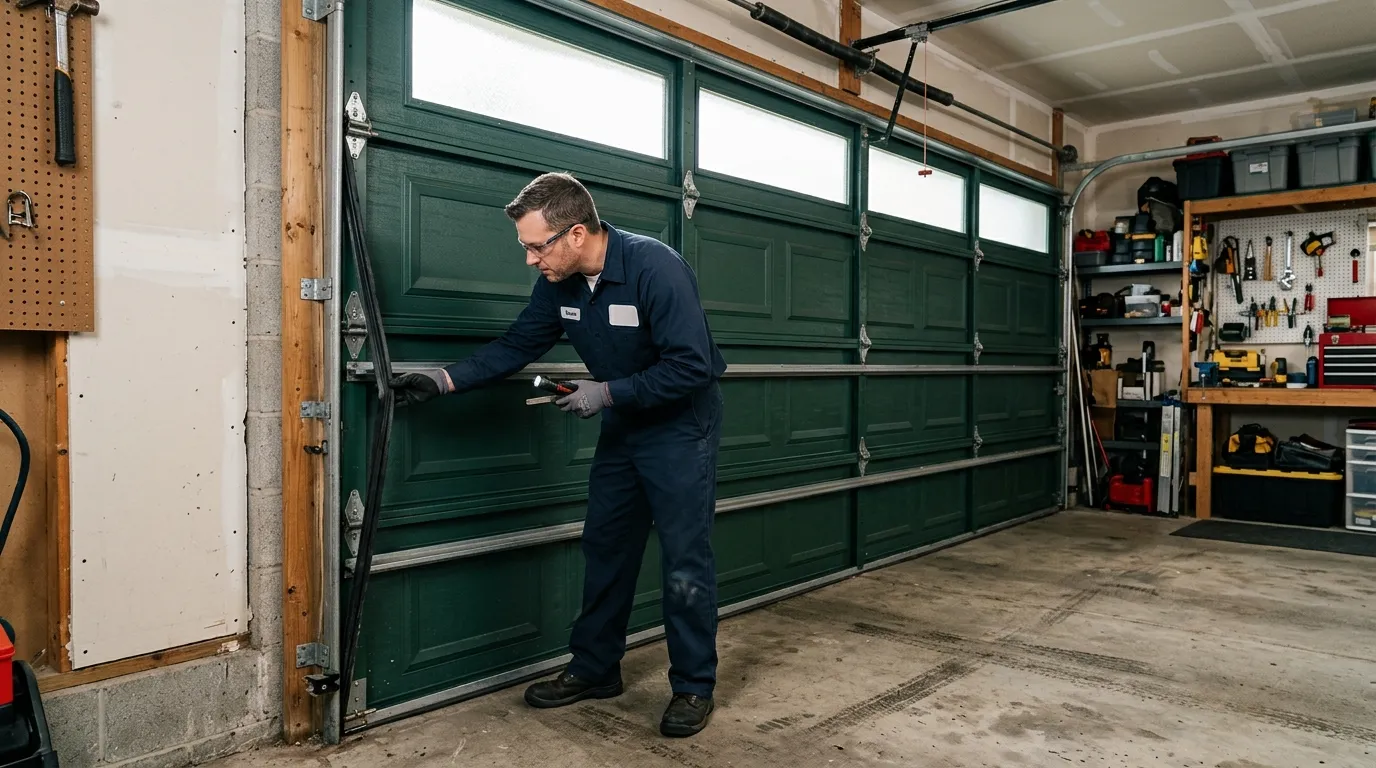
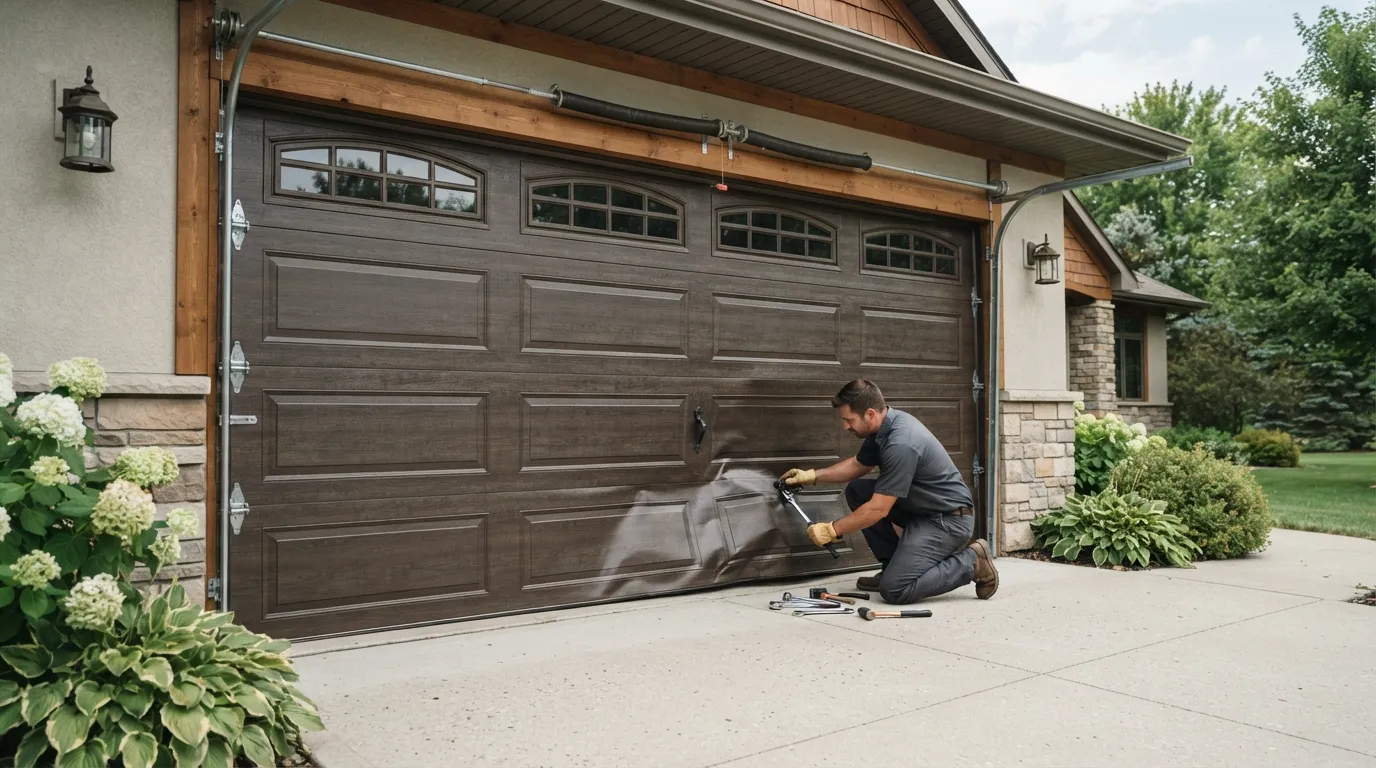
A garage door cable is under real tension even with the door closed, because the springs are still loaded. Cutting or unhooking a cable without releasing that tension first is how people end up hurt, and it's the main reason this isn't a good weekend project even for someone comfortable with basic tools. If the door is already down and immobile, leave it that way and don't force it by hand or with the opener - forcing a jammed door on a bad cable can bend the track or crack a panel, turning a cable repair into a bigger job. About the only safe DIY step is visual: look at the cable near the bottom bracket for fraying or rust, and check whether the door hangs level or tilts to one side, since that tells whoever comes out roughly what they're dealing with before they arrive.
Booking
If your cable has already snapped or you're seeing the early signs - a slight lean, a popping noise, visible fraying at the bracket - get in touch and we'll get a truck routed out from Old Bridge, four miles up the road. Details on the full range of work we do in South River, including what's covered beyond cable repair, are on the [South River garage door repair page](/south-river-garage-door-repair/). If you're comparing this against how we handle the same repair back in Old Bridge itself, that's laid out on the [Old Bridge cable repair page](/garage-door-cable-repair-old-bridge-nj).
Questions
We run out of Old Bridge, about four miles away, so South River is one of the closer stops on the route. We don't quote a fixed response time here, but the short distance means a same-day visit is realistic for most calls.
Cable wear is gradual - strands fray slowly until the last one gives out, often overnight. On older South River homes built around 1958, decades of cold-weather stress on the original hardware speeds that process up, so a door that looked fine can fail with no warning the next morning.
Cable and spring failures often show up close together, especially on older torsion or extension setups that have both aged the same amount. Any cable call includes a check of the springs and drums before we call the repair finished.
The cable sits under spring tension even with the door shut, and releasing that tension without the right approach is how people get hurt. It's not a job we'd recommend tackling without the right setup, even for a confident DIYer.
Explore more
Ready when you are
Old Bridge Garage Door Pros repairs and installs garage doors, springs and openers in Old Bridge, NJ and the surrounding area.