
Sideways opening uneven liftage
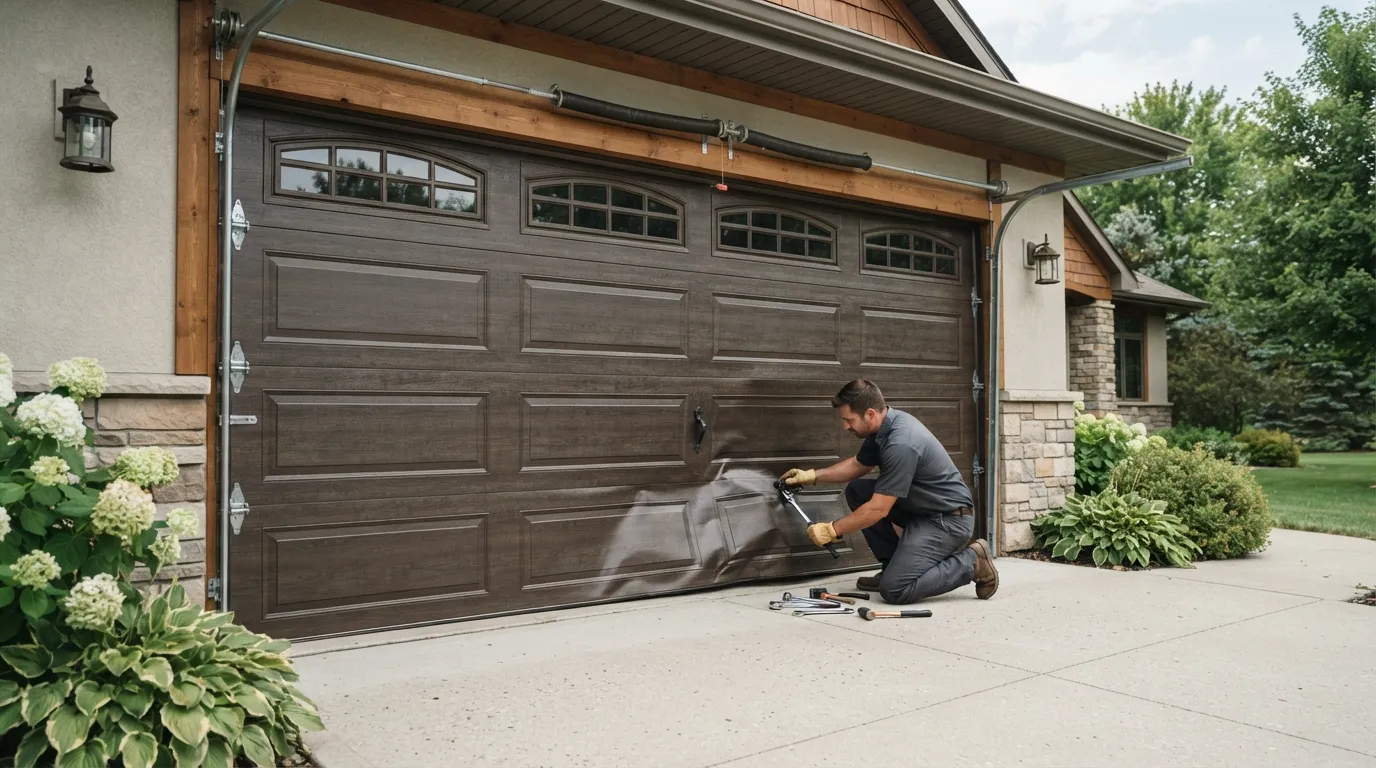
On a double door, that's often one snapped torsion spring while its twin still holds - which is why the door looks like it's trying to open sideways instead of lifting straight.
South River, Old Bridge
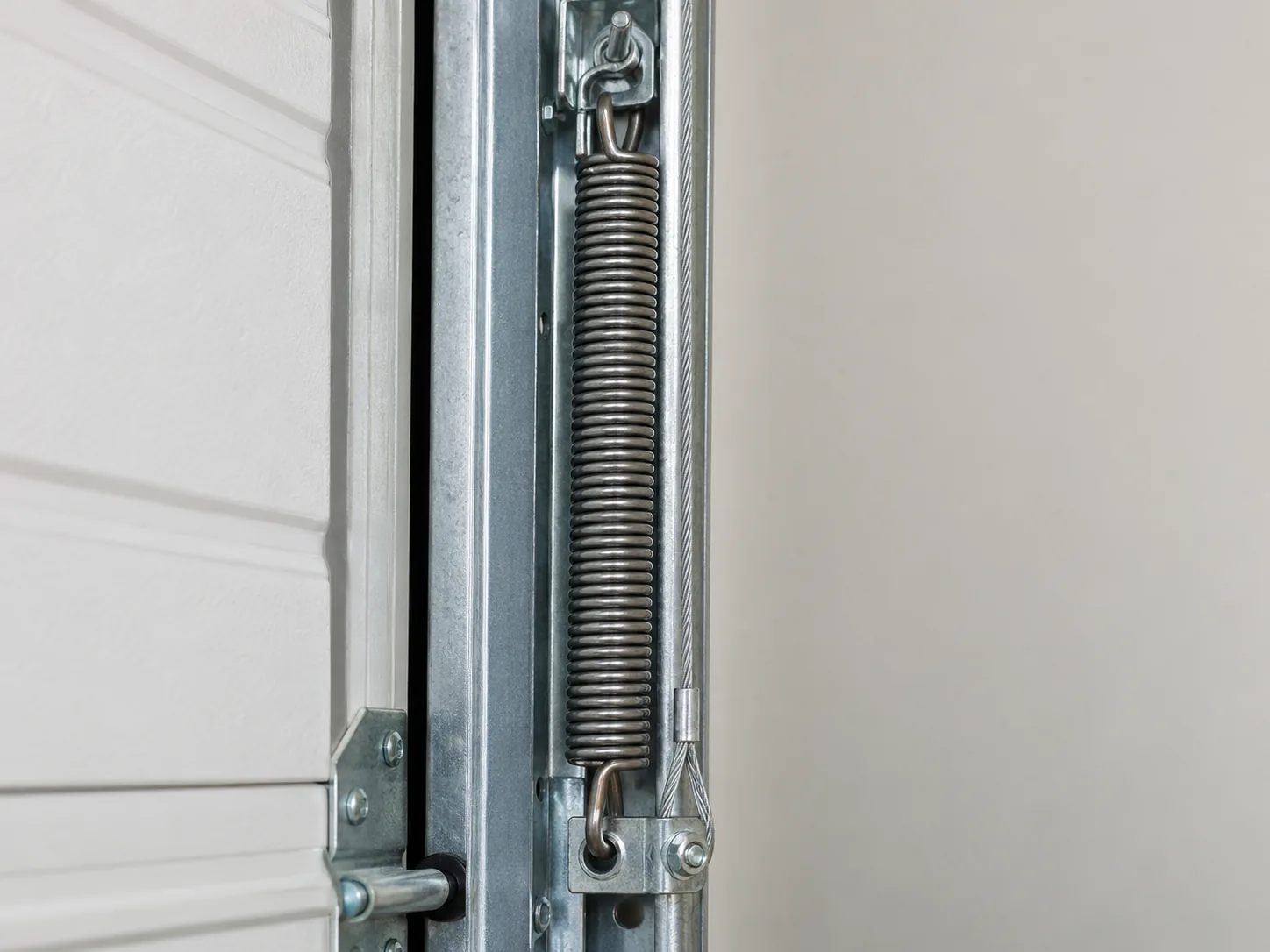
Spring repair for South River's 1958-era housing stock, done by a crew that drives the 4 miles from Old Bridge. Torsion and extension spring work on original hardware.
Warning signs
The fault we see most in South River isn't a slow squeak that builds over months. It's a door that won't budge one morning, or one that slams down the last foot of track because the spring gave out and stopped counterbalancing the weight of the panels.
On a double door, that's often one snapped torsion spring while its twin still holds - which is why the door looks like it's trying to open sideways instead of lifting straight.
South River's median home was built around 1958, which puts a lot of these houses ahead of the torsion-spring standard that later became common across newer subdivisions. On a house from that era we regularly find an older extension-spring setup running along the horizontal track, sometimes without the safety cables that keep a broken spring from becoming a projectile.
That's not a knock on the house - it's just what got installed the year it was built, and it's still doing the job forty-plus years later, right up until it isn't.
Local causes
Cold makes steel brittle before it makes it weak, and this region sits in a climate band with real winter severity. A spring that's cycled thousands of times over the decades develops metal fatigue, and a cold snap is often what finishes the job - not because the cold itself breaks it, but because contracted steel has less give left when the door asks for one more lift.
Age of the hardware matters just as much as age of the house. With a median build year of 1958 in South River, a lot of these springs have never been swapped, only wound tighter or adjusted by whoever serviced the door decades back. Extension springs on older track systems also tend to be sized for a lighter, single-layer wood door - if a panel replacement went in later without matching the spring rating, the door is working against tension it was never balanced for, and that shortens the life of the new spring fast.
On the truck
We carry torsion springs in the common shaft diameters and wire gauges that fit both older extension-to-torsion conversions and the newer torsion setups you'll find on doors replaced within the last couple decades.
We also carry standard extension springs and the safety cables that should be running through them, since we still find that combination missing on houses built before it was code.
We don't stock every spring on the market - some odd sizes from long-discontinued door brands need to be special-ordered, and if that's your situation we'll tell you straight rather than jury-rig something that won't hold.
For the common sizes, the job is a same-visit fix: match the spring to the door weight and track type, set the tension, and run the door through a full cycle before we leave.

DIY or pro
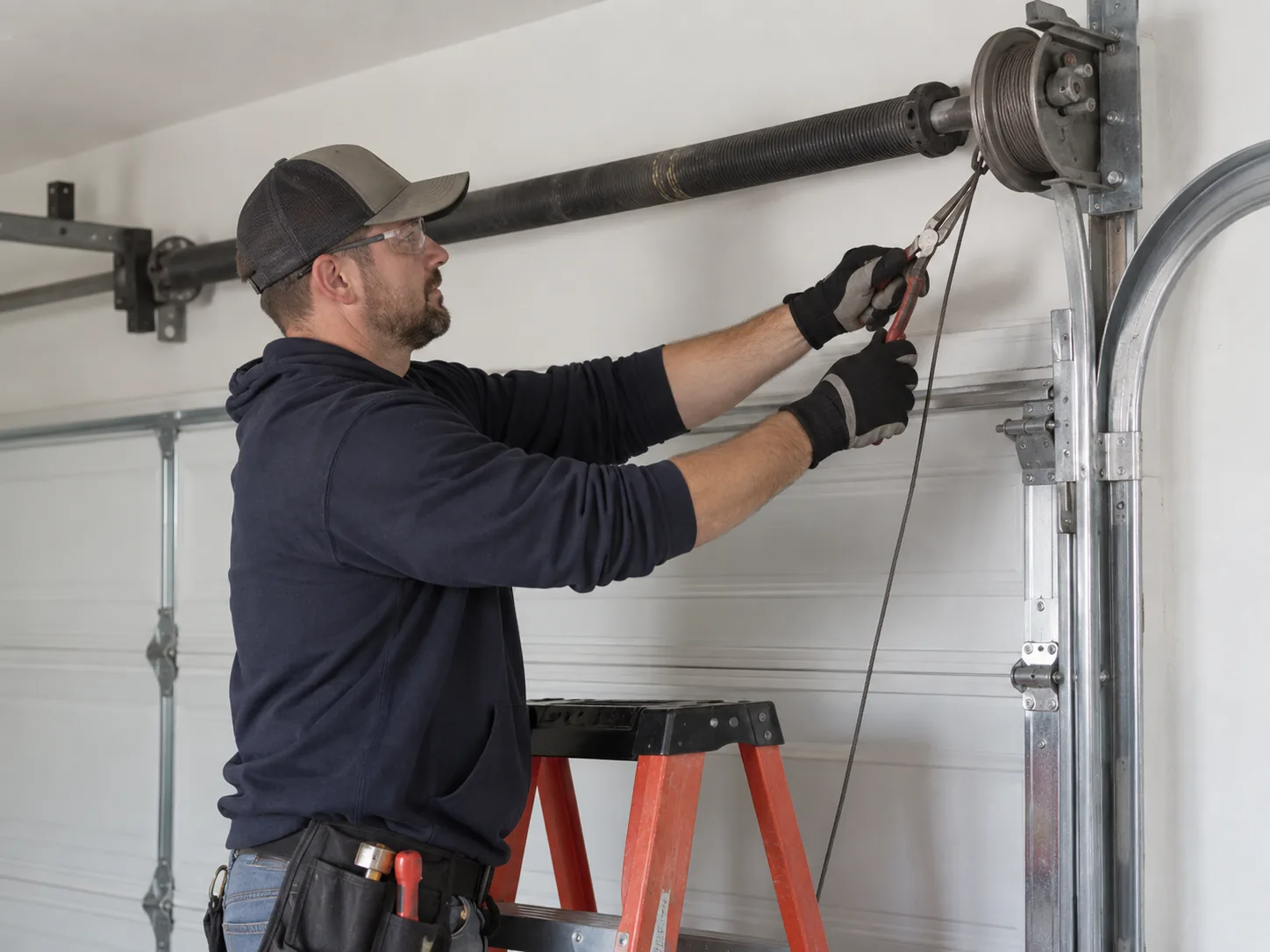
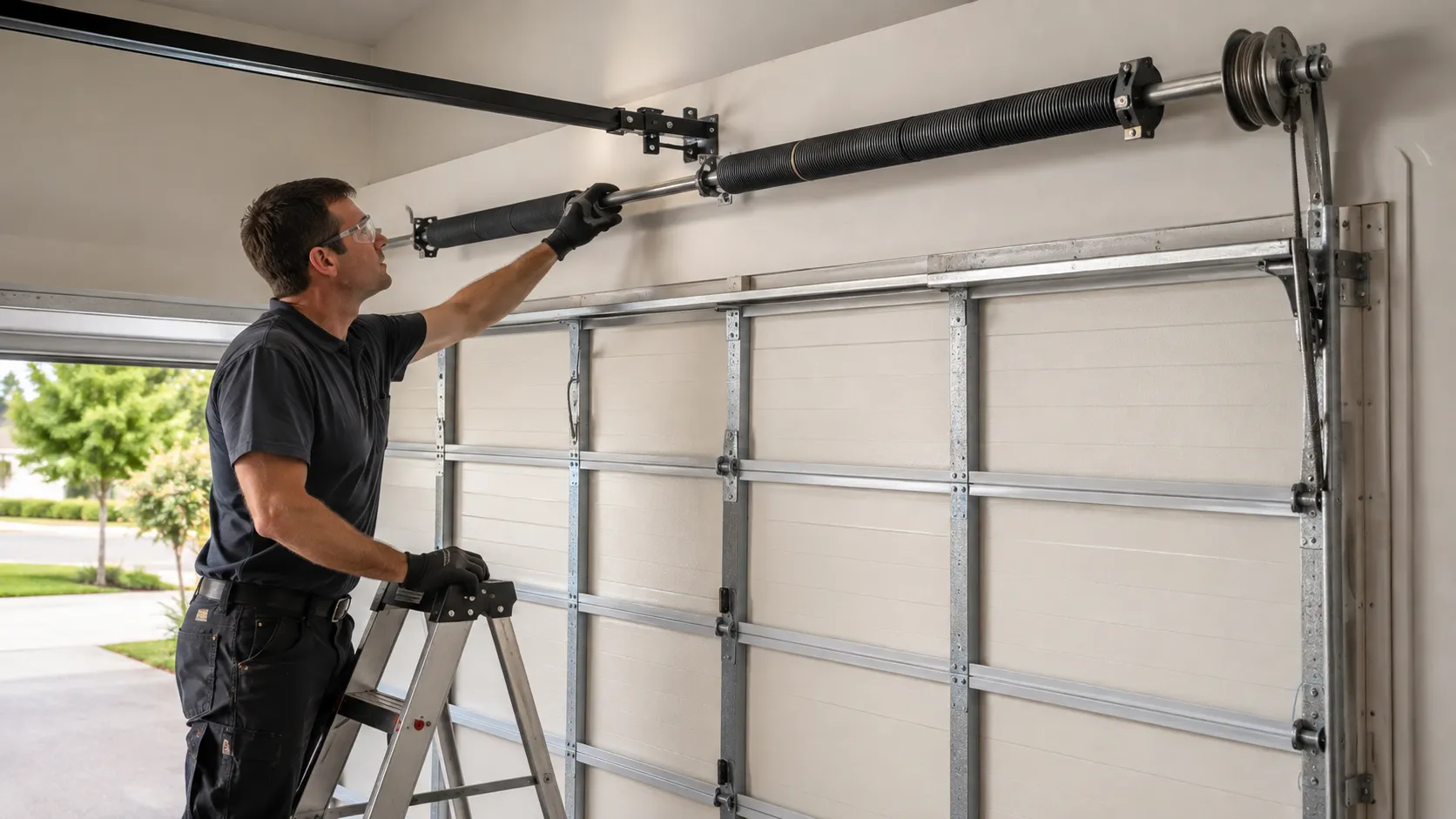
A torsion spring is under enough stored tension to break a wrist or worse if it lets go while you're working on it, and that risk doesn't go down because the house is older - if anything it goes up, since a spring that's been under load since 1958-era construction can fail unpredictably the moment you unwind it. Extension springs are a bit more forgiving to look at but still dangerous to remove without the right bars and clamps.
What you can safely check yourself: whether the door is off-balance (it should stay put at waist height when disconnected from the opener), whether cables look frayed, and whether the spring itself has a visible gap in the coil. If any of that is true, that's the call to make, not the repair to attempt.
Booking
We work South River from our base in Old Bridge, about 4 miles up the road, so getting a truck to a spring failure here doesn't mean a long wait for someone from across the county. Tell us the door's age if you know it, whether it's one door or two, and whether it's stuck open, stuck shut, or hanging crooked - that tells us which springs to load before we leave the shop.
For the general South River page or to see how we handle other door issues in town, check [South River Garage Door Repair](/south-river-garage-door-repair/). If you're actually in Old Bridge proper, the [Old Bridge spring repair page](/garage-door-spring-repair-old-bridge-nj) covers that job for your address instead.
Questions
There's no fixed number, but a spring that's original to a house built around 1958 - South River's median build year - has had decades of cycles on it. Combined with cold-weather metal fatigue, that's well past the point where failure without warning becomes likely rather than unusual.
Yes. A lot of South River's older housing stock still runs extension springs on horizontal track, and we carry standard sizes for that along with the safety cables that should run through them. Some discontinued door-brand sizes need a special order, which we'll flag upfront.
If one spring snapped and the other is original and the same age, replacing both at once usually makes sense - the second one is close to the same wear and will likely go next. We'll look at the actual door and tell you which situation you're in rather than assume.
No, we run out of Old Bridge, about 4 miles away, and drive to South River jobs from there. We don't have a branch or depot in town.
Explore more
Ready when you are
Old Bridge Garage Door Pros repairs and installs garage doors, springs and openers in Old Bridge, NJ and the surrounding area.