
Guide
Detached and Attached Garages Age Differently in Old Bridge
Old Bridge homes built between 1938 and 2005 have very different detached and attached garage setups. Here's what to check on each before winter hits.
Local detail
What to Check
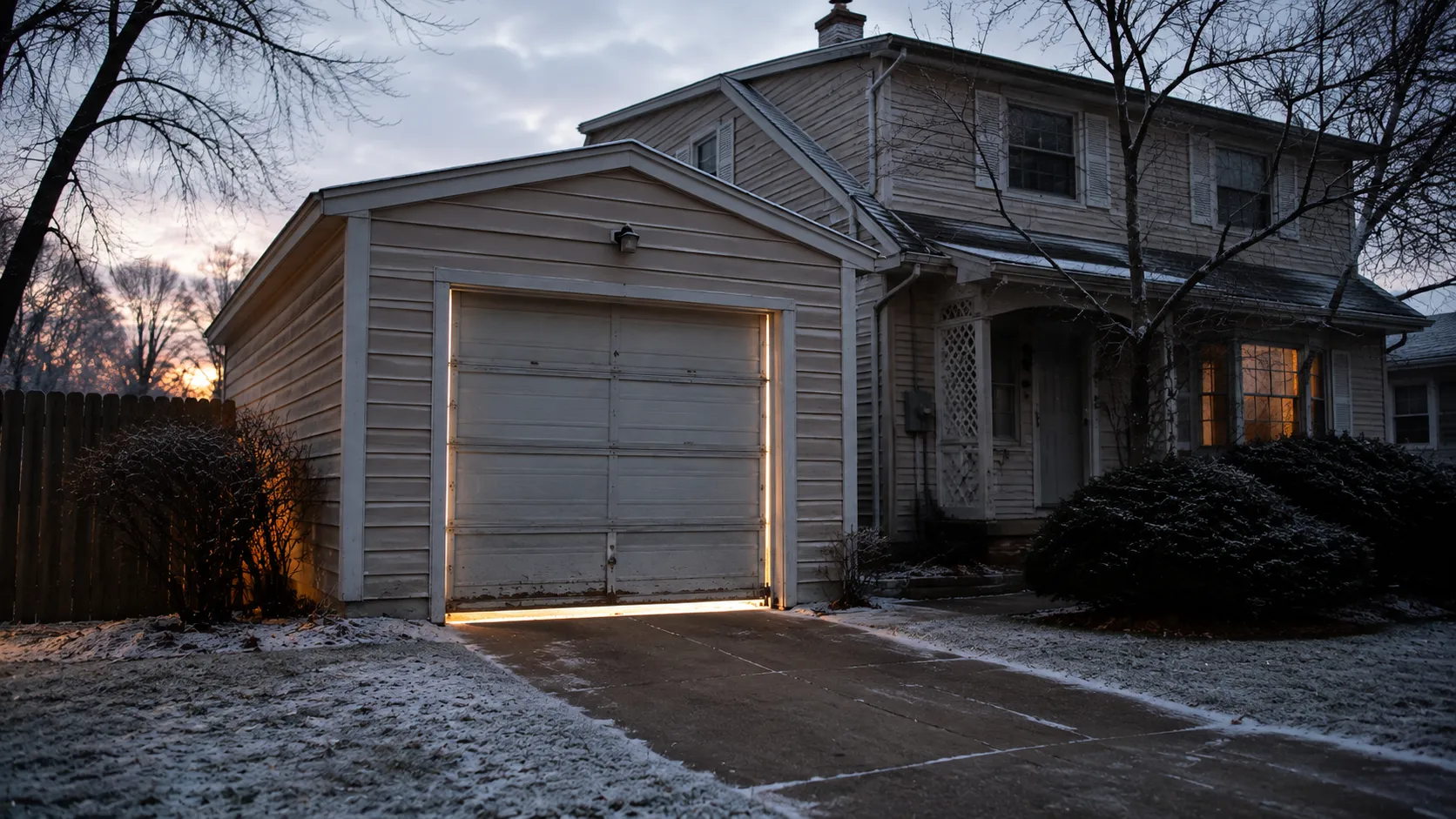
Old Bridge has a mix of housing ages, mostly from the 1960s and 70s but stretching from 1938 up through 2005, and that spread matters more than most owners think when it comes to the garage. On an attached garage, the door shares a wall with living space, which usually means the opener sits closer to insulated framing and the track runs through a shorter, more sheltered span. On a detached garage - more common on the older lots from the 1938-1960s wave - the structure sits exposed on all four sides, so the door and track take the full brunt of wind and temperature swings with nothing buffering them.
Check the bottom seal first on a detached unit; it's usually the first thing to crack or curl because the slab underneath isn't tied into a heated foundation. On an attached door, check where the track bolts into the framing near the house - older homes from the mid-century stock in this area often have hardware that was never upgraded when the opener was replaced. Look at the panels too. On the older detached structures, panels are more likely to be the original steel or wood from whenever the garage was built, not matched to a newer attached addition.

The area
What Most People Get Wrong
The most common mistake here is treating a detached garage door like it's the same job as the attached one on the same property. It isn't. A detached structure moves independently in frost - no shared foundation with the house means the slab can heave a little differently, and that throws the track out of square in ways an attached door, tied into the main foundation, usually doesn't experience.
People also assume that because a house was built decades ago, both garages (if there are two, or a house has both an attached bay and a detached shed-style structure) are the same vintage. In a town with housing spanning 1938 to 2005, that's often false - a detached garage may predate the house's last renovation by decades, with older hardware and a different spring size than what's on the attached door. Skipping a look at the detached unit because 'the garage door guy already came' for the attached one is how a stuck detached door gets ignored until it fails in January.
What we find
What the Weather Here Does to It
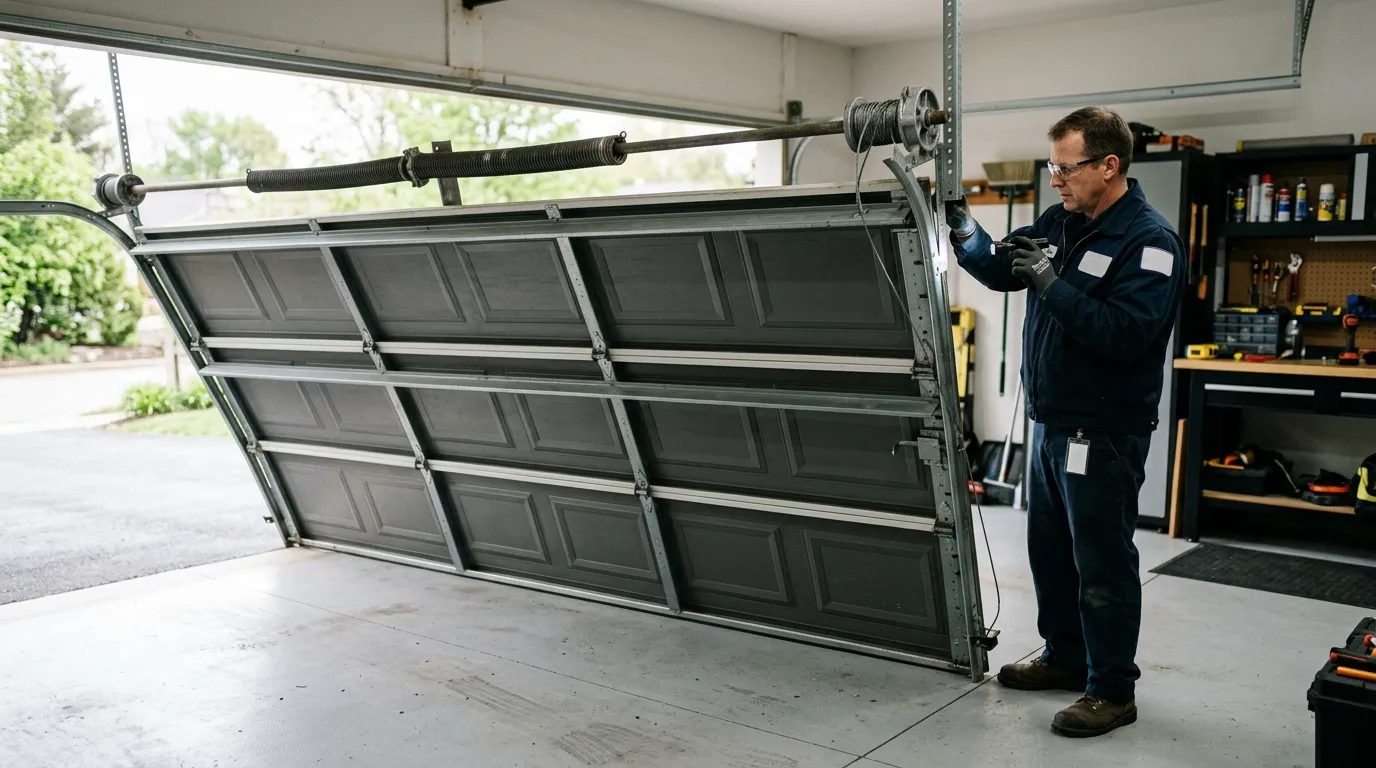
Old Bridge sits in a cold, severe winter climate band, and that hits detached and attached garages differently. An attached garage picks up some ambient heat from the house - enough, often, to keep grease from stiffening up on the rollers and torsion spring. A detached garage gets none of that. The steel torsion spring loses tension faster in cold air, and on a detached structure with no shared heat source, that drop happens sooner in the season and stays more pronounced through the coldest stretch.
Condensation is the other issue. An attached garage, warmed slightly by the house, tends to have less moisture cycling on the track. A detached garage swings with the outdoor temperature all day, so moisture forms and refreezes on the track and hinges more often. On homes built in the 1960s and 70s - the bulk of the stock here - that repeated freeze-thaw on original or early-replacement hardware is what finally cracks a hinge or seizes a roller.
How we work
What Is Going On
If a detached garage door in this area is sticking, slow, or noisy in winter but the attached one on the same property is fine, the cause is almost always the missing heat buffer plus older hardware, not one bad part. We can't tell you which without seeing it - that's the honest limit here, since spring size, track wear, and slab condition vary house to house even on the same street.
What we can say: if your home dates to the earlier end of the 1938-2005 range and the detached structure hasn't had its spring or rollers touched, it's worth a look before the coldest weeks hit. Waiting until a spring snaps in a detached garage in January means a delayed fix, since replacement parts for older, non-standard hardware aren't always on the truck.
Questions
Common questions
Does a detached garage door need different maintenance than an attached one in Old Bridge?
Yes. A detached garage has no shared heat with the house, so the torsion spring and rollers feel the cold-climate temperature swings more directly. On an attached door, some warmth bleeds through the shared wall, which slows down how fast grease stiffens and hardware stiffens in winter.
Why is my detached garage door harder to open in winter than the attached one?
The spring on a detached door loses tension faster in cold air because there's no adjacent heated space buffering it. Combined with a slab that can heave independently of the house foundation, the track can go slightly out of square, adding resistance right when the spring is already weaker.
My house was built in the 1960s - is the garage door original?
Possibly. Old Bridge's housing stock mostly dates to the 1960s and 70s, and a lot of original hardware on detached structures was never upgraded when openers were modernized. Worth checking the spring size and track condition against what's typical for that era.
Can you tell me what's wrong without seeing the garage?
Not reliably. Spring wear, track alignment, and slab condition vary even between two houses built the same year, so a phone diagnosis on a detached structure is a guess at best. A look at the door tells us more in five minutes than a description can.
Ready when you are
Need a garage door sorted in Old Bridge?
Old Bridge Garage Door Pros repairs and installs garage doors, springs and openers in Old Bridge, NJ and the surrounding area.