
Guide
That Noise Your Door Is Making Isn't Nothing
Grinding, popping, or slapping sounds mean different things on Old Bridge's older doors. Here's how to tell a slack cable from a dying opener before it fails on you.
Local detail
What to Check
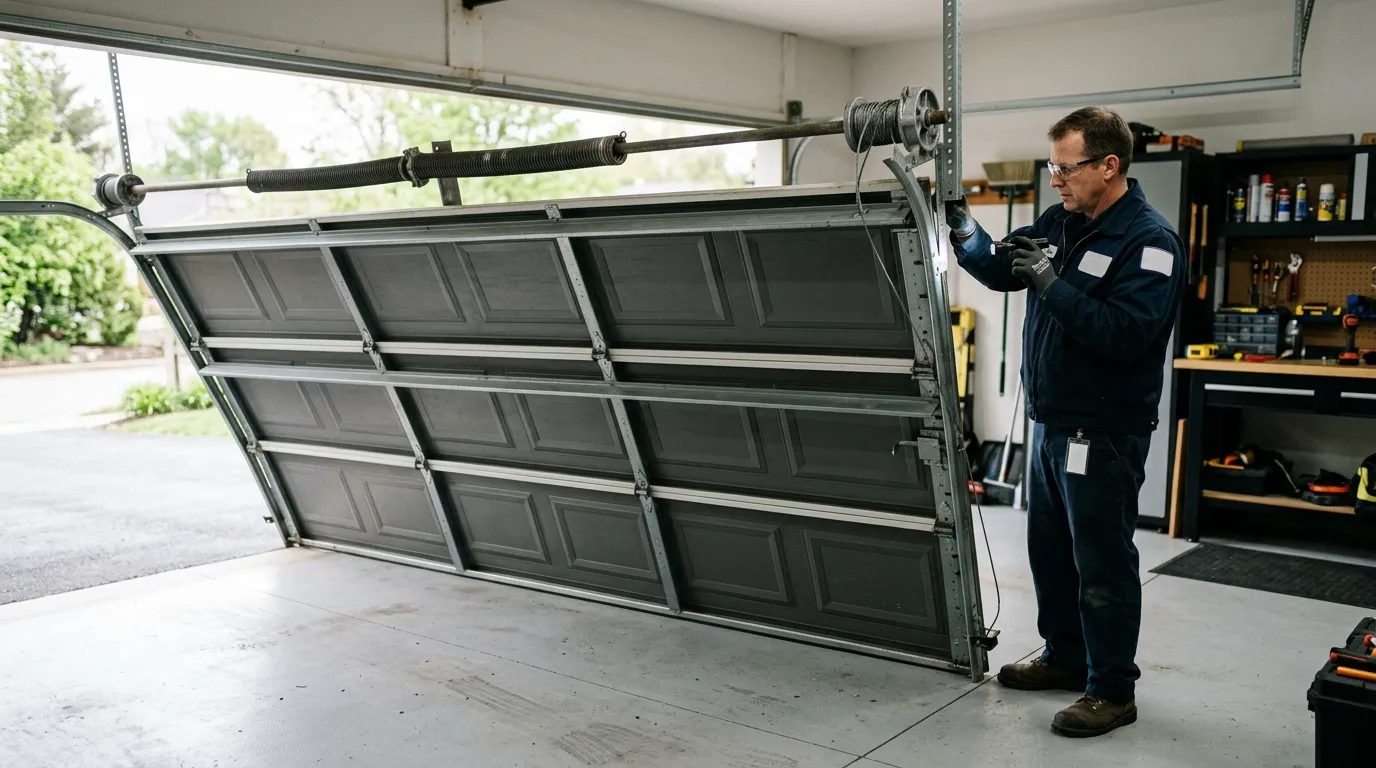
Start with the springs. A lot of Old Bridge houses went up between the late 1950s and the 1970s, and a big share of that stock still runs original torsion hardware that's outlived a couple of openers already. Stand clear and listen for a metallic pop or a loud bang from overhead - that's usually a spring losing tension, not the opener.
Next, the tracks. Run the door by hand (opener unplugged) and feel for grinding or a rhythmic thunk as it passes the rollers. On houses from that 1960s-70s wave, steel rollers on worn track are common, and they announce themselves with a squeal that gets worse, not better, over a few weeks.
Check the cables last. A slapping sound as the door closes, almost like a loose belt, usually means a cable has gone slack on one side. That's not a lubrication problem - it's a hardware problem, and it means the door is closing unevenly even if you can't see it.
Write down when the sound happens: opening, closing, or both. That detail alone tells a tech more than a video ever will.

The area
What Most People Get Wrong
The instinct is to grab the spray can. WD-40 on a noisy roller or hinge quiets things down for about a week, then the grinding comes back louder, because oil isn't lubricant made for the load a garage door track carries. On the older torsion setups still common in this area, that quick fix also masks the sound of a spring that's actually failing, which is worse than doing nothing.
The other mistake is assuming a noisy opener means a dying motor. Nine times out of ten on a house from that 1965-ish median build era, the opener has been swapped once or twice already, but the original track and springs never were. The opener is the newest part in the system and the least likely thing making that sound.
People also wait too long. A new rattle on a door built for a home from the 1938-2005 stock range here usually means a part is at the end of its life, not the start of a problem. Waiting for it to get worse just means the eventual call happens on a Sunday instead of a Tuesday.
What we find
What the Weather Here Does to It
This area sits in a cold-severe climate band, and that matters more for garage doors than people expect. Steel springs and cables contract in hard winter cold, which changes tension slightly on every torsion system in the region - that's part of why a door that was quiet in October starts groaning in January. It's not damage yet. It's steel doing what steel does at low temperatures.
Moisture is the other half of it. Freeze-thaw cycles work grease out of bearing plates and roller stems faster than a mild climate would, which speeds up the exact grinding and squealing described above. A door that would run quiet for years somewhere warmer needs attention sooner here.
We don't recommend chasing every seasonal squeak with a service call. Some noise in a cold snap is normal and settles once temperatures stabilize. The one you don't ignore is a new, loud pop - that's a spring, and springs don't get better with warmer weather.
How we work
What Is Going On
Put it together and most of what you're hearing traces back to two things: age and cold. With housing in this service area running from the late 1930s through the mid-2000s, and a median build year around 1965, there's a wide mix of original torsion hardware, one or two generations of opener swaps, and track that's never been replaced. Add a cold-severe climate on top of that, and steel parts move more than owners expect.
A new sound doesn't always mean a new problem - but it means something changed, and on a door this age, that something is worth naming before it fails at a bad time. We won't tell you to replace a door that just needs a spring or a roller set; that's a repair, not a replacement, and we say so. But if the track is bent or the opener has been rebuilt twice already, sometimes the honest answer is that fixing it again isn't worth the part cost. Either way, the noise is the door telling you which one it is.
Questions
Common questions
My door makes a loud bang once and then seems fine. Should I worry?
That single bang is very likely a torsion spring letting go, especially on the older hardware common in this area. The door may still open using the opener's motor strength for a while, but it's running unbalanced and unsafe. Treat that sound as urgent even if nothing looks broken yet.
Why does my garage door get noisier every winter?
Cold contracts steel and dries out grease in bearing points faster in a severe-cold climate like this one. A door that's quiet most of the year can pick up a grinding or squealing sound in January that fades some by spring. It's normal to a point, but a new loud pop is not.
Is the opener usually the problem when things get loud?
Not as often as people assume. Openers get replaced more than once over a house's life, so on older homes in this area the opener is frequently the newest part in the system. Track, rollers, and springs are original more often and are the more likely source of a new noise.
Ready when you are
Need a garage door sorted in Old Bridge?
Old Bridge Garage Door Pros repairs and installs garage doors, springs and openers in Old Bridge, NJ and the surrounding area.