
Guide
What a Technician Checks First on an Old Bridge Garage Door
Old Bridge homes mostly date to the 1960s-70s building boom. Here's what we check first on a service call, and why the age of this housing stock matters.
Local detail
What to Check
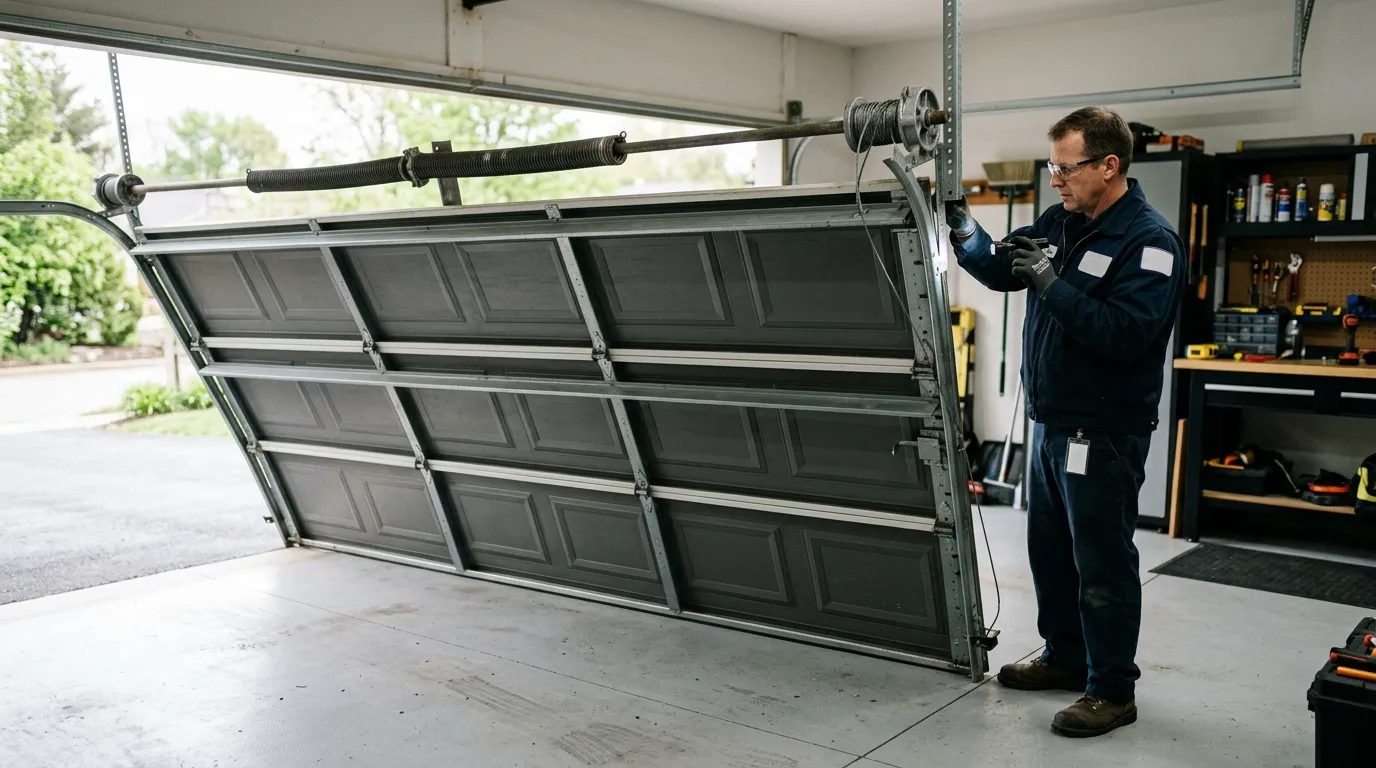
On a first visit in Old Bridge, we start with the springs, not the opener, because most of the calls that come in as "opener won't work" turn out to be a torsion spring that's lost tension and is making the opener strain to lift a door it can't handle alone. We check spring wind and cable condition, then move to the track and rollers, then the bottom brackets. Given that most of this area's housing went up between the 1960s and 1970s, a lot of what we find is original hardware that's simply worn out from age rather than damaged by one bad event. We also check the mounting on the header - homes from this era often have wood jambs that have shifted slightly over sixty years, which throws off door alignment in ways that look like a spring problem but aren't.
Last, we look at the slab itself for cracking near the track bolts, since concrete from that build period is now well past its original life expectancy in a lot of driveways we see. None of this takes long, but skipping it means guessing at a repair instead of finding the actual cause. We'd rather spend ten extra minutes checking than replace a part that wasn't the problem.

The area
What Most People Get Wrong
The most common mistake we see in Old Bridge is treating a noisy door as a lubrication problem when it's actually a roller or hinge that's outlived its steel. Given that a lot of the housing stock here dates back to the 1960s and 1970s, a good share of these doors are running on hardware from a prior owner, sometimes from a prior era of the house entirely, and WD-40 doesn't fix metal fatigue. People also assume a door that looks fine from the outside is fine mechanically.
It isn't. Torsion springs are rated for a number of cycles, and a door installed when a house was built in the mid-1960s has had decades to burn through that rating even if nobody ever heard it snap. Another one: homeowners replace the opener and expect the door to run quiet again, when the opener was never the noisy part.
We won't sell a new opener to fix a spring problem, and we'll say so on the call even if it means a smaller job than the one you called about. The honest answer costs us less trust than the alternative.
What we find
What the Weather Here Does to It
This area sits in a cold-climate band with real winter severity, and that matters more for garage doors than most people expect. Steel contracts in cold, and on doors with worn weatherstripping or a track that's slightly out of plumb, that contraction is enough to bind a roller or throw a cable off its drum on the first hard freeze of the season. We see a jump in spring-related calls after a stretch of sustained cold, not because the cold breaks the spring outright but because a spring that was already near the end of its life finally gives under the added load of a stiffer, colder door.
Homes built in the 1960s-70s wave that makes up most of this area's stock often still have the original insulation levels in the door panel itself, which means more temperature swing inside the garage and more stress on the hardware than a newer, better-sealed door would see. We check weatherstripping and bottom seal condition on every cold-weather call for this reason, not because it's an upsell, but because a bad seal is doing real damage to the rest of the door every winter it's left alone.
How we work
What Is Going On
Put simply: age and cold are doing the work here, not bad luck. With a median build year around 1965 and most of the surrounding stock from that same 1960s-70s window, a large share of the doors we're called out to see are on their second or third owner and still running close to original hardware. That's not a knock on any one house - it's just what happens when equipment rated for a fixed number of cycles keeps getting used well past when a newer door would have already been swapped out.
Add a real cold winter into that mix and you get failures that look sudden but were building for years. We won't tell you every older door needs full replacement - plenty of these doors are structurally sound and just need spring, cable, or seal work to run another decade fine. But when the springs, the track, and the panel insulation are all original to a house from this era, replacement sometimes makes more financial sense than another round of patch repairs, and we'll tell you that plainly instead of running up a repair bill first.
Questions
Common questions
Why does my garage door get harder to open in the winter?
Cold makes steel contract, and on an older door with worn weatherstripping or a track that's slightly out of alignment, that's often enough to bind a roller or add drag on the cable. Given the cold-climate severity here, that added strain during a hard freeze is a common reason a marginal spring finally fails in winter rather than in summer.
My house was built in the 1960s - is the garage door original?
It's possible. A lot of this area's housing dates to the 1960s and 70s building period, and springs, rollers, and cables from that era are well past their rated cycle life even if they've never audibly failed. We check the hardware age on every first visit rather than assuming.
Should I fix or replace an older door?
Depends what's original and what's already been replaced. If the springs, track, and panel insulation are all original to a house from the 1960s-70s stock common here, repair costs start adding up fast and replacement often makes more sense. We'll tell you honestly which side of that line your door is on.
Ready when you are
Need a garage door sorted in Old Bridge?
Old Bridge Garage Door Pros repairs and installs garage doors, springs and openers in Old Bridge, NJ and the surrounding area.