
Guide
When a Spring Goes in Cold Weather Here in Old Bridge
Old Bridge homes built between 1938 and 2005 carry original torsion hardware that cold snaps push past its limit. Here's what to check before the door won't open.
Local detail
What to Check
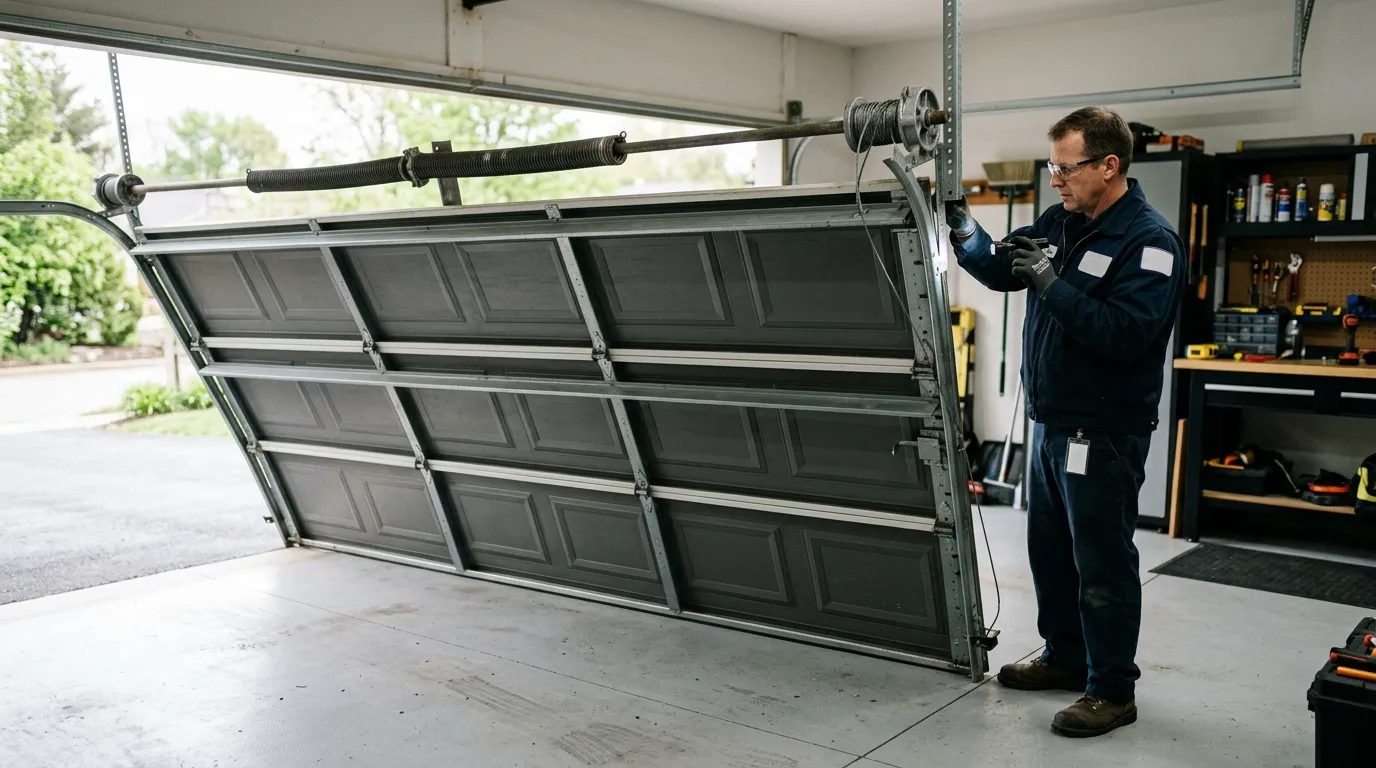
Start with the spring itself, not the opener. If the door won't budge and the opener motor hums or clicks without lifting, the torsion spring above the door has likely let go. On a lot of Old Bridge houses built in that long stretch between 1938 and 2005, the spring is original or a first replacement, sized for the door weight it had decades ago, not for the weatherstripping and insulation upgrades added since.
Look at the spring itself: a gap in the coil means it's broken, and you should stop trying to open the door by hand or by remote. Check the cables on both sides for fraying near the bottom bracket - cold makes steel cable brittle, and a snapped cable under spring tension is dangerous. Check the rollers too. Nylon rollers that were fine in October can crack outright once temperatures drop, especially on doors that see morning frost on the track.
If the door is heavy to lift by hand with the opener disconnected, that's your spring telling you it's losing tension, cold weather or not. Don't wait for full failure before calling.

The area
What Most People Get Wrong
People assume the opener is the problem because that's the part that makes noise. It almost never is. The opener is designed to assist a properly sprung door, not lift dead weight, and when a torsion spring loses tension - or breaks outright - the motor strains and burns out trying to do a job it wasn't built for. Replacing the opener without addressing the spring just buys you a second broken part.
The other mistake, common across the 1960s-70s housing stock that makes up most of this area, is assuming a spring that's held for fifty years will keep holding. Steel fatigues. A torsion spring is rated for a number of open-close cycles, and once it's near the end of that count, cold weather is often what finally pushes it over the edge, not the cause of the failure itself.
We don't recommend patching a spring with tape or a come-along clamp as a long-term fix. It's a way to get a car out for one trip, not a repair. If your spring has broken, the fix is a full spring replacement sized to your door, not a workaround.
What we find
What the Weather Here Does to It
This area sits in a cold-severe climate band, and that matters more for garage doors than most people think. Steel contracts as it cools, and a torsion spring that's already fatigued from age or cycle count loses just enough flexibility in a hard cold snap to snap outright rather than simply losing tension gradually. That's why spring failures cluster on the coldest mornings of the year rather than spreading evenly across the calendar.
Cold also stiffens the lubricant on rollers and hinges, so a door that moved smoothly in summer suddenly drags, putting extra load on a spring that's already working harder in the cold. Metal track brackets can also shift slightly with freeze-thaw cycles on a garage floor slab, throwing the door slightly out of alignment - not enough to notice by eye, but enough to add resistance the spring has to fight against every time the door opens.
We see this pattern often enough on original torsion hardware from Old Bridge's older housing stock that we treat any 'door suddenly hard to lift' call differently once the temperature drops.
How we work
What Is Going On
Put it together and the picture is straightforward. Old Bridge's housing runs from 1938 up through 2005, with the bulk of it dating to the 1960s and '70s, which means a large share of doors in town are running on torsion springs installed one or two replacement cycles ago, not five. Those springs are old enough to be near the end of their rated cycle life, and this area's cold-severe winters are exactly the kind of stress that finishes off a spring that was already close to failing.
We won't tell you every hard-to-lift door needs a same-day emergency call - sometimes it's a roller or a lubrication issue, and we'll say so on-site rather than upsell a spring job you don't need yet. But if the spring has visibly separated, that's not a wait-and-see repair. It's a safety issue, and it's also the point where trying to force the door open by hand risks the cable next.
If you're not sure which one you've got, the check above will usually tell you before we ever get to the driveway.
Questions
Common questions
Why did my garage door spring break in the middle of winter and not before?
Most torsion springs fail from a combination of age and cold, not cold alone. A spring near the end of its cycle life is already weakened, and steel loses flexibility as it contracts in cold-severe weather. The two together push a spring that was already close to failing over the edge, which is why breaks cluster on the coldest days.
Is it safe to open my garage door manually if the spring is broken?
No. Without spring tension, the door's full weight is on the cables and the person lifting it. On older Old Bridge homes with original torsion hardware, that weight can be significant. Leave the door down, disconnect the opener if you can do so safely, and don't force it.
My opener runs but the door won't lift - is that the opener or the spring?
Almost always the spring. Openers are built to assist a properly sprung door, not lift dead weight on their own. A motor that hums, clicks, or strains without moving the door is a strong sign the torsion spring has lost tension or broken, not that the opener itself has failed.
Ready when you are
Need a garage door sorted in Old Bridge?
Old Bridge Garage Door Pros repairs and installs garage doors, springs and openers in Old Bridge, NJ and the surrounding area.