
Guide
Weather Seals and Draughts on Old Bridge Garage Doors
Old Bridge homes built mostly 1960s-70s face cold-climate draughts through worn garage door seals. Here's what to check and what actually fails first on this housing stock.
Local detail
What to Check
Start at the bottom seal, the rubber strip running along the floor of the door. On a house from the 1960s or 70s, that track has usually been re-poured or resurfaced at least once, and the seal groove no longer sits flush the way it did when the door went in. Push a flashlight along the bottom edge at night with the door closed. Light coming through means air is coming through.
Next check the side and top seals, called weatherstrip or astragal depending on who installed it. On doors from the 1938-2005 range that make up most of this housing stock, you'll find three eras of stripping: old foam tape, vinyl bulb seal, and newer PVC retainer strips. Each wears differently and none of them last forever.
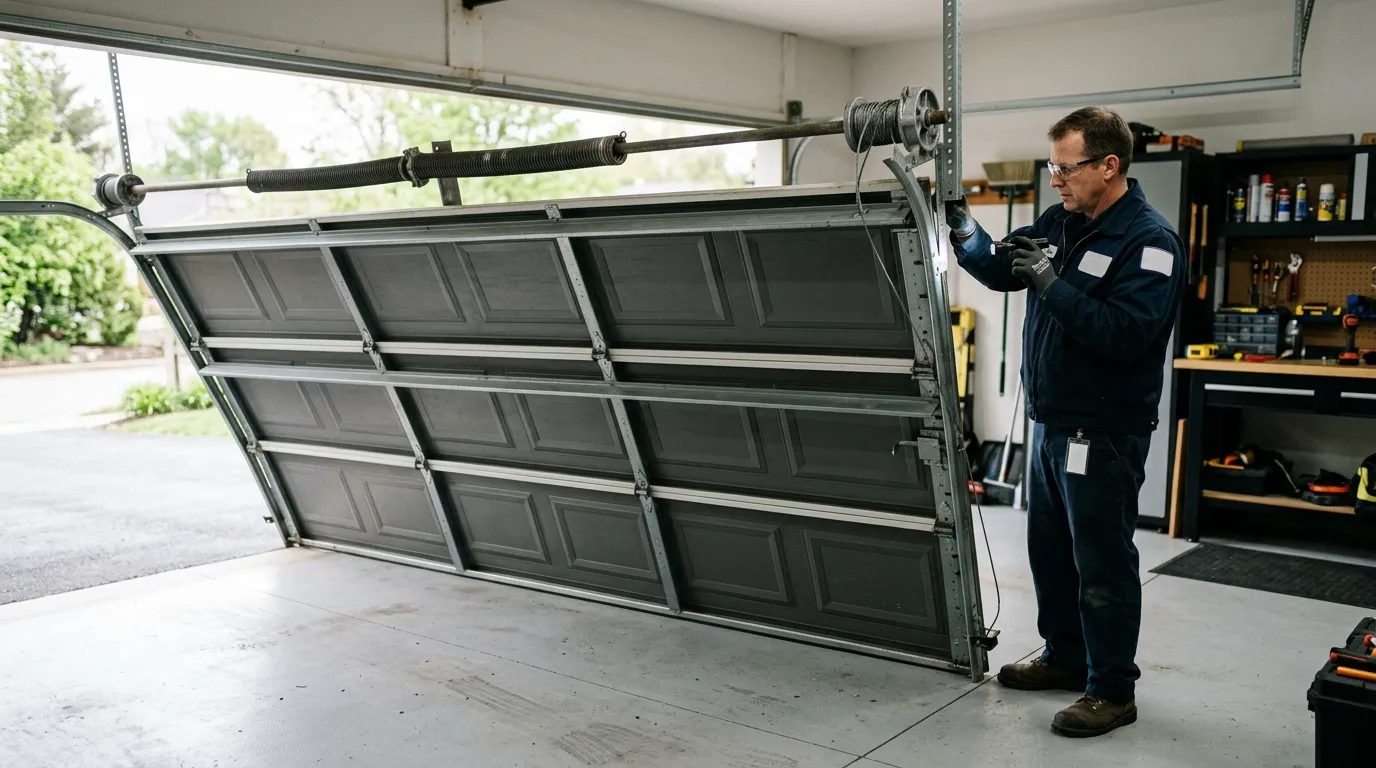
Last, check the panel seams themselves if the door is a steel sectional. Older doors, especially anything installed before insulated cores became common, have thinner steel that flexes more in cold weather and opens tiny gaps at the seams. That flex is often where the draught is actually coming from, not the bottom seal at all.
One honest limitation: a flashlight test tells you where air moves, not how much heat you're losing. If you want a real number, that takes a blower door test, which isn't something a garage door call includes.

The area
What Most People Get Wrong
The most common mistake is replacing the bottom seal and stopping there. On a lot of the 1960s and 70s stock in this area, the seal was never the only problem - the track itself has settled unevenly over sixty-plus years, so a brand new seal still leaves gaps on one side. Swapping the rubber without checking the track for level is a five-year fix at best.
The second mistake is assuming a draught means the door needs full replacement. Sometimes it does. But on houses built in that median-1965 window, the door itself is often original steel that's structurally sound - the seals and stripping have just aged out. Replacing the whole door when a seal kit and a track adjustment would do it is money spent for no reason.
Third, people ignore the seam gaps on older uninsulated steel panels and just keep adding foam tape to the edges. That's a patch, not a fix. If the panel is flexing enough to open a seam every winter, the panel is the problem, not the tape.
What we find
What the Weather Here Does to It
This area sits in a severe cold climate band, which means real freeze-thaw cycling every winter, not just a few cold nights. That cycling is hard on rubber and vinyl seals specifically - they contract in the cold, lose flexibility, and eventually crack or pull away from the retainer strip. A seal that looked fine in October can have a visible split by February.
Cold also stiffens the steel in older sectional doors, which is part of why panel seam gaps show up more in winter than summer. The metal contracts slightly and any existing flex at the seams becomes a wider gap right when you most need it sealed.
The draughts you feel in a garage aren't just cosmetic here. Cold air pooling along a poorly sealed bottom edge drops the temperature in an attached garage enough to matter if there's a water heater, a freezer, or plumbing running along that wall - a real concern given how many houses in this area were built before that kind of insulation was standard.
How we work
What Is Going On
Put together, the pattern in this area is consistent: houses built between 1938 and 2005, most of them clustered in the 1960s and 70s, paired with a genuinely severe cold climate. That combination means seals wear out on a shorter cycle than the marketing on the packaging suggests, and the original steel doors from that era are old enough now that stripping has usually been replaced at least once already, sometimes with a mismatched retainer system that doesn't seal as well as the original.
If your door dates to that build window and you're feeling a draught, the seal and the track are the first places to look, in that order. If the door itself is flexing at the seams under cold-weather stiffening, that's a panel or door-age issue, and no amount of new weatherstripping fixes it permanently.
Questions
Common questions
How often do garage door seals need replacing in Old Bridge?
There's no fixed schedule, but with the severe cold-climate cycling here, rubber and vinyl seals tend to crack or pull loose faster than they would in a milder climate. If your door is original to a house from the 1960s or 70s, check the seal every fall before the first hard freeze.
Is a draughty garage door a sign I need a new door?
Not usually. Most of the older steel doors in this area are still structurally sound - the seals and stripping are what wear out. Replacement makes sense when the panels themselves are flexing and opening seam gaps in cold weather, not just when the bottom seal is worn.
Why does my garage feel colder in winter even with the door closed?
Cold air pools along a poorly sealed bottom edge, and in houses built before better garage insulation was standard, that cold can sit against a wall with plumbing or a water heater on it. Check the bottom seal and track level first.
Ready when you are
Need a garage door sorted in Old Bridge?
Old Bridge Garage Door Pros repairs and installs garage doors, springs and openers in Old Bridge, NJ and the surrounding area.