
Guide
Knowing When Repair Stops Making Sense in Old Bridge
A guide for Old Bridge homeowners on when a garage door repair still makes sense and when the 1960s-70s hardware underneath it means it's time to replace instead.
Local detail
What to Check
Start with the spring, not the opener. Most of Old Bridge's housing stock went up between 1938 and 2005, with the bulk of it dating to the 1960s and 70s, and that generation of door came with torsion springs rated for a shorter cycle life than what's sold today. If your spring is original, it's already past the point where a rewind or a shim buys you much.
Check the track next for rust bloom at the bottom three feet, where road salt splashes off tires in winter. Check the panels for delamination on the bottom section, since that's the one that takes the brunt of snow melt and refreeze. Check the cables for fraying near the bottom bracket.
If two or more of these show wear at once, you're not looking at a repair, you're looking at a door that's telling you it's done. One check people skip: pull the manual release and lift the door by hand. If it feels heavy or uneven, the spring is carrying less than it should, and that imbalance is what burns out openers early.
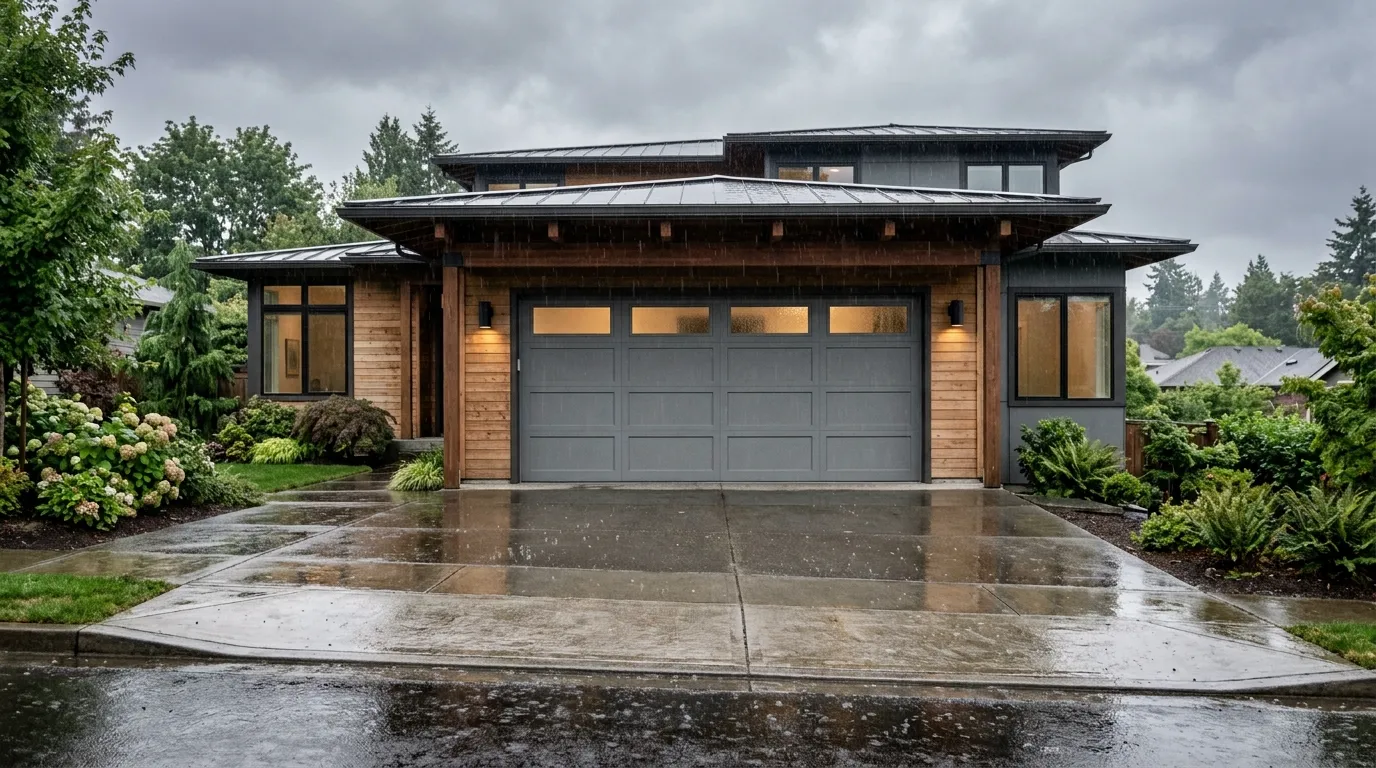

The area
What Most People Get Wrong
The mistake we see most in this area is treating the opener as the problem when the door itself is the problem. A house built in the median year around here, 1965, likely has a door and track sized to specs that don't match a same-day parts swap. People call about a noisy opener, we find a bent track from decades of settling, and the opener was just working harder to compensate. Fixing the opener alone gets you a quiet motor pushing against the same bad geometry, and you're back to a service call within a year.
The other common error is chasing a cheap fix on a door old enough that individual parts are getting harder to source. A new roller here, a new hinge there adds up fast on original hardware, and past a certain point you've spent replacement money on a door that's still going to fail elsewhere. We won't string a repair out just to keep billing you; if the math doesn't work, we'll say so.
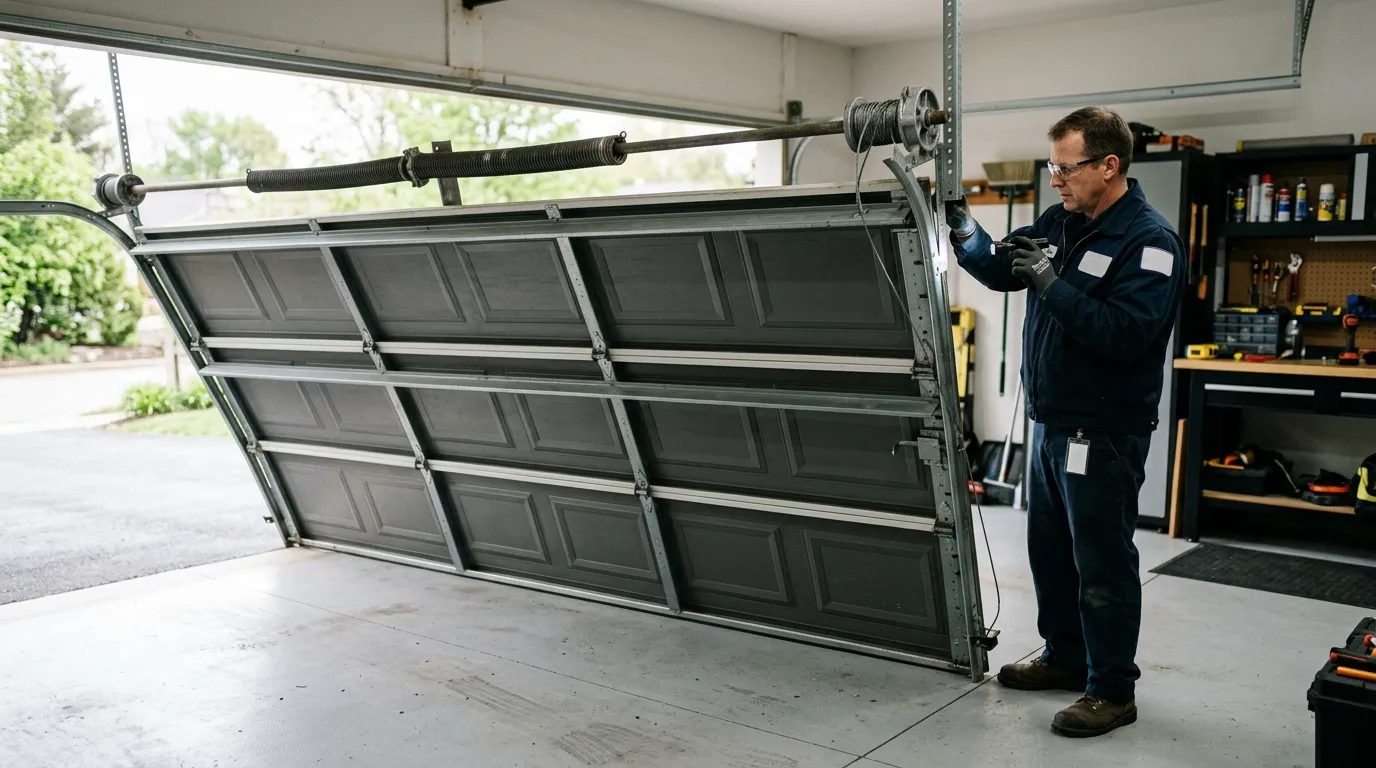
What we find
What the Weather Here Does to It
This area sits in a cold, severe climate band, and that matters more for garage doors than people expect. Steel contracts in deep cold, which tightens tolerances on tracks and rollers that were already loose from age. On original hardware from the 1960s-70s stock common across this area, that contraction is often what turns a minor rattle into a jammed door on the first hard freeze of the season.
Repeated freeze-thaw cycles also work on the weatherstripping and the bottom seal, and once that seal fails, moisture gets into the panel material and works from the inside out. We see the failure pattern every winter: doors that ran fine in October start binding by January, not because anything broke suddenly, but because cold exposed wear that summer never would have. If your door is already showing multiple small issues, cold weather is what turns them into one call you can't put off.
How we work
What Is Going On
Put plainly, a lot of doors in Old Bridge are reaching the point where their age and the local climate are working against each other faster than repairs can keep up. A door built when the median home here went up, around 1965, has had six decades of cold-weather cycling on it, and hardware from that era wasn't built with today's cycle-life expectations. When you're facing a spring that's original, a track that's rusted at the base, and weatherstripping that's failed, that's three separate repairs on a door that's already worked past its reasonable life. At that point, replacement costs less over the next five years than a string of one-off fixes.
We'll always tell you honestly which side of that line your door is on. Sometimes it's one part and a real repair. Sometimes it's a door that's earned its retirement, and putting more money into it just delays the inevitable call.
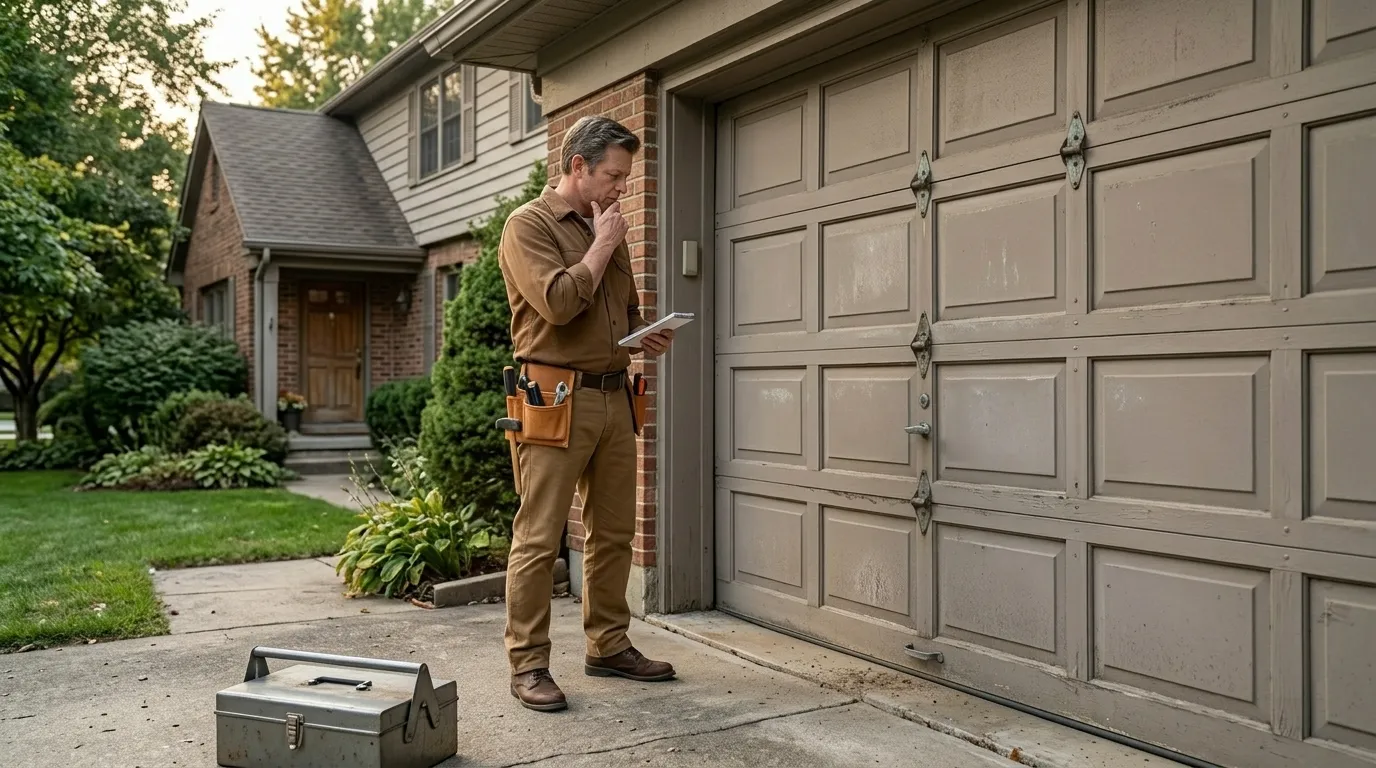
Questions
Common questions
How do I know if my garage door spring is original to the house?
If your home was built in the decades common across Old Bridge, the 1960s and 70s, and the spring has never been replaced, it's likely original. Original torsion springs from that era were rated for fewer cycles than current parts. If nobody has records of a swap, assume it's original and have it checked before it fails under load.
Why does my door act up worse in winter here than it did in fall?
This area sits in a cold, severe climate band, and steel hardware contracts in deep cold. Small looseness in a track or roller that's tolerable in October can tighten into a bind by January. It's not new damage, it's old wear that cold weather exposes.
Is it ever worth repairing a door instead of replacing it?
Yes, if the problem is isolated, like a single broken cable or a bad sensor. It stops being worth it when you're facing multiple failures at once, like spring, track, and seal together, on a door that's already decades old. At that point the repairs add up to more than replacement.
Ready when you are
Need a garage door sorted in Old Bridge?
Old Bridge Garage Door Pros repairs and installs garage doors, springs and openers in Old Bridge, NJ and the surrounding area.